
Breaking News · France · Civil Unrest · Cost of Living · Education · Police Accountability · DINA Analysis
PARIS — October 18, 2026, 4:06 p.m. ET: French President Emmanuel Macron has ordered a review of possible intelligence and police-preparedness failures after nationwide cost-of-living demonstrations were followed by France's worst unrest in years.
What is confirmed: France's interior minister said one demonstrator died after suffering cardiac arrest, police made more than 2,000 arrests and more than 600 police officers were injured. Reuters reported fresh clashes in Paris and incidents in Marseille on Sunday. The Associated Press reported that the arrest count had reached at least 2,400 by the time of Macron's televised address.
What remains contested: Government officials blamed much of the violence on radical far-left groups and criminals. That attribution is the government's account and does not establish individual responsibility. Organizers and authorities also reported different turnout figures, while investigations into serious protester injuries and police tactics remain active.
Mass demonstrations followed by riots and looting
France's Interior Ministry said approximately 550,000 people joined 110 marches Saturday. Organizers estimated participation at about 800,000. The demonstrations brought together students, labor groups and other residents protesting rising prices, deteriorating public services and conditions in schools.
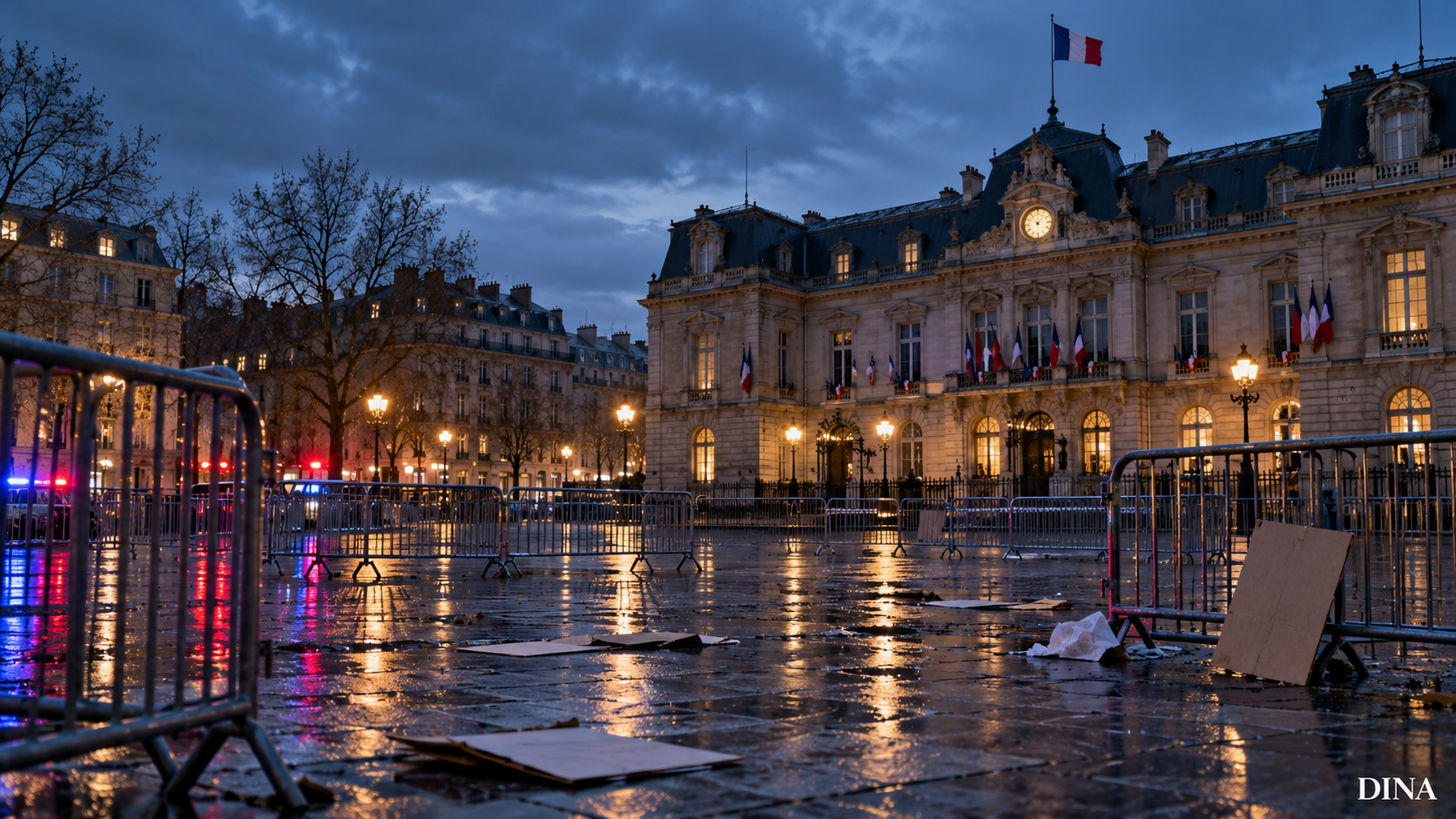
Most participants were not reported to have taken part in violence. Rioting and looting nevertheless caused extensive damage in Paris and other cities. Reuters reported that the historic Limoges city hall was largely destroyed by fire, businesses were looted and public buildings were attacked. Carrefour's chief executive said 50 of the retailer's stores were damaged, including 20 that were looted.
Reuters reported that one protester died after suffering cardiac arrest during demonstrations in Paris. The reported cause does not establish that police or another person caused the death. Separate investigations are examining serious injuries to protesters, including injuries potentially connected to police crowd-control weapons.
Macron orders review and raises possibility of protest bans
In a televised address Sunday evening, Macron condemned the looting and vandalism and said those responsible would be held accountable. He ordered a review of whether intelligence gathering or police preparation failed before the demonstrations.
Macron said prefects and mayors would be empowered to prohibit some gatherings where authorities consider bans necessary. He also called for students, teachers, lawmakers, unions and business leaders to meet during the coming week and produce proposals addressing the crisis, but he did not announce a detailed economic or education package.
Why it matters
The unrest presents two simultaneous democratic tests: whether France can protect peaceful assembly while preventing attacks on people, civic buildings and businesses, and whether the government will address the underlying complaints about school conditions, public services, inequality and household costs.
The scale of arrests and reported injuries also creates an urgent need for transparent case-by-case review. Mass arrest totals do not show how many people will be charged or convicted, and official descriptions of political affiliation cannot substitute for evidence against individual defendants.
DINA independent analysis
This section is DINA analysis, not a statement of independently established fact. Macron's review is significant only if it produces public findings, identifies specific command failures and distinguishes intelligence about planned violence from lawful political organizing. A broad security response without those safeguards could chill peaceful protest and deepen the grievances that brought hundreds of thousands into the streets.
The strongest accountability angle is the government's dual obligation: investigate rioting, arson and looting through ordinary evidence-based prosecutions, while independently examining police tactics, severe protester injuries and whether authorities were prepared despite advance warning of a large national mobilization.
Strongest accountability questions
- How many people were arrested, remain in custody, have been charged or have been released without charge?
- What evidence supports official claims about organized extremist involvement, and will authorities distinguish alleged organizers from peaceful participants?
- What warnings did intelligence services and local police receive before the demonstrations, and when were they shared?
- Which command decisions left civic buildings and commercial districts vulnerable?
- What weapons and crowd-control tactics were used, and what caused the most serious protester injuries?
- What legal standard and appeal process will govern any bans on future gatherings?
- What measurable commitments will the government make on school staffing, public services and household costs?
Urgent records and follow-up requests
- Obtain the Interior Ministry's final national arrest, injury and property-damage accounting.
- Request Macron's intelligence-and-preparedness review mandate, membership, deadline and publication rules.
- Seek police operational orders, use-of-force reports and after-action reviews for Paris, Limoges, Marseille, Lyon and Bordeaux.
- Request prosecutorial data showing charges, detention decisions, dismissals and outcomes by jurisdiction.
- Obtain independent police-oversight files concerning severe protester injuries.
- Track emergency assistance for damaged municipalities, residents and small businesses.
Sources
- Reuters — Macron condemns “shocking” scenes of violence across France, October 18, 2026
- Reuters — France counts the cost of worst unrest in years as tensions flare again in Paris, October 18, 2026
- Associated Press — Macron condemns rioting after nationwide protests, October 18, 2026
- Associated Press — Clashes, fires and looting break out as protesters rally across France, October 17, 2026