
Breaking news · Russia–Ukraine war · Diplomatic security · DINA analysis
MOSCOW and KYIV — Russia's Foreign Ministry said Saturday that Russian forces would continue what it called “massive retaliatory strikes” against Kyiv and other Ukrainian cities, while again urging foreign nationals and diplomatic personnel not to remain in or travel to Ukraine.
The statement, reported by Reuters and Interfax, followed several days of intensified Russian attacks on Kyiv's bridges and other infrastructure. Russia said its armed forces were striking military facilities in response to Ukrainian attacks inside Russia. Ukraine and Russia each deny intentionally attacking civilians, although the effects of the expanding air campaign are increasingly disrupting civilian transportation, electricity and daily life.
The warning is official and consequential. It does not, however, identify a specific target, date, weapon or operational plan for a future attack. DINA is therefore reporting the threat as a Russian government statement—not as proof that a particular strike is imminent.
What Russia said
In its October 3 statement, the Russian Foreign Ministry said Russia was systematically conducting strikes on what it described as military facilities in Kyiv and other Ukrainian cities. It said the strikes would continue and warned foreign citizens, including diplomatic personnel, against remaining in Ukraine.
The ministry placed responsibility for adverse consequences on people who disregard that warning. Russia has issued similar warnings before, but Saturday's statement came after a new sequence of attacks on multiple Dnipro River crossings and an explicit public commitment to continue large-scale strikes.
What is confirmed — and what is not
- Confirmed: Russia's Foreign Ministry issued the renewed warning on October 3 and said “massive retaliatory strikes” would continue.
- Confirmed: Russia urged foreign nationals and diplomatic staff not to remain in or travel to Ukraine.
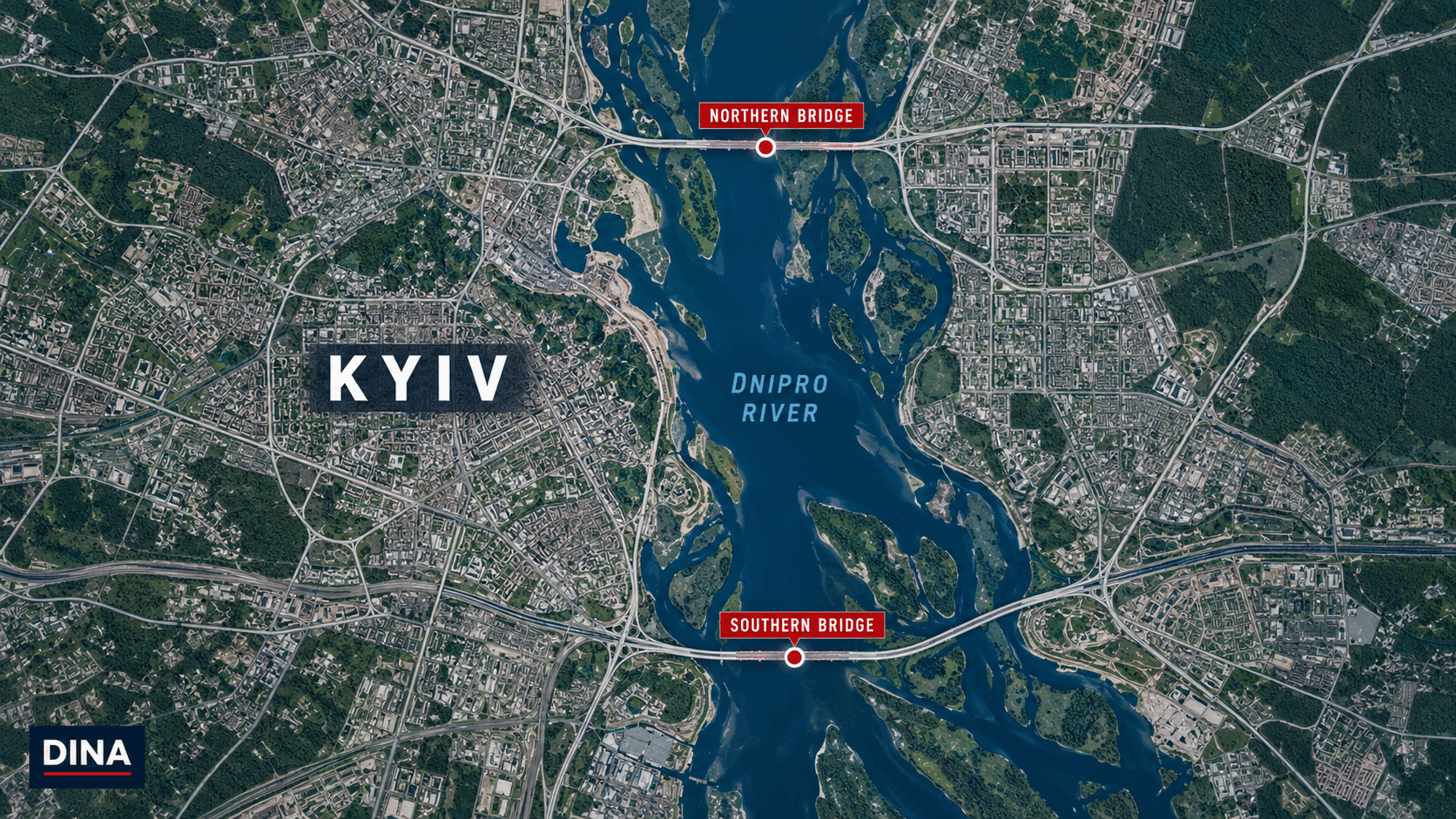
- Confirmed: Russia has recently intensified attacks on Kyiv infrastructure, including a Saturday strike that damaged the Northern Bridge.
- Confirmed: Ukraine's Foreign Ministry said on October 2 that it had received no formal notification that foreign missions intended to relocate.
- Not established: The statement does not disclose a target list, attack timetable, weapons package or evidence that diplomatic facilities are intended targets.
Why it matters
An official warning directed at diplomats raises the stakes beyond ordinary battlefield rhetoric. Foreign missions are protected civilian objects under international law unless used for military purposes, and governments must assess whether the language represents a general safety warning, an effort to isolate Ukraine diplomatically or advance notice of a substantially expanded strike campaign.
Kyiv's approximately three million residents are already confronting repeated attacks on bridges, transportation and energy infrastructure ahead of winter. An expanded campaign could deepen risks to heating, electricity, water, emergency response and civilian movement even if Russia continues to describe its targets as military.
DINA analysis: warning, coercion and accountability
DINA analysis: The strongest immediate conclusion is that Moscow has placed its policy on the record: strikes will continue, and foreigners have been told to leave. That is a material escalation in declared posture, but it is not reliable evidence of where or when the next weapon will land.
The diplomatic warning may serve several purposes at once—protecting Russia's legal and political narrative, pressuring embassies to reduce their presence, amplifying fear in Kyiv and signaling that foreign personnel could be exposed to an intensified campaign. Those are analytical possibilities, not confirmed motives.
The accountability test will be the conduct of the attacks themselves: the targets selected, the weapons used, the precautions taken, the foreseeable civilian harm and whether Russia distinguishes military objectives from homes, bridges, energy systems and diplomatic premises. Public warnings do not erase obligations under the laws of armed conflict.
Urgent follow-up
- Obtain the complete Russian Foreign Ministry statement and any diplomatic notes transmitted to foreign governments.
- Ask the U.S. State Department, European Union and individual embassies whether staffing, shelter or relocation plans have changed.
- Request Ukraine's updated account of diplomatic notifications and civilian-protection measures.
- Preserve radar data, geolocated imagery, weapon fragments and damage assessments from subsequent strikes.
- Track whether Russia identifies the claimed military objective and proportionality assessment for each affected civilian site.