
Breaking News · Executive Action · Antiquities Act · White House · Historic Preservation · Public Property · DINA Analysis
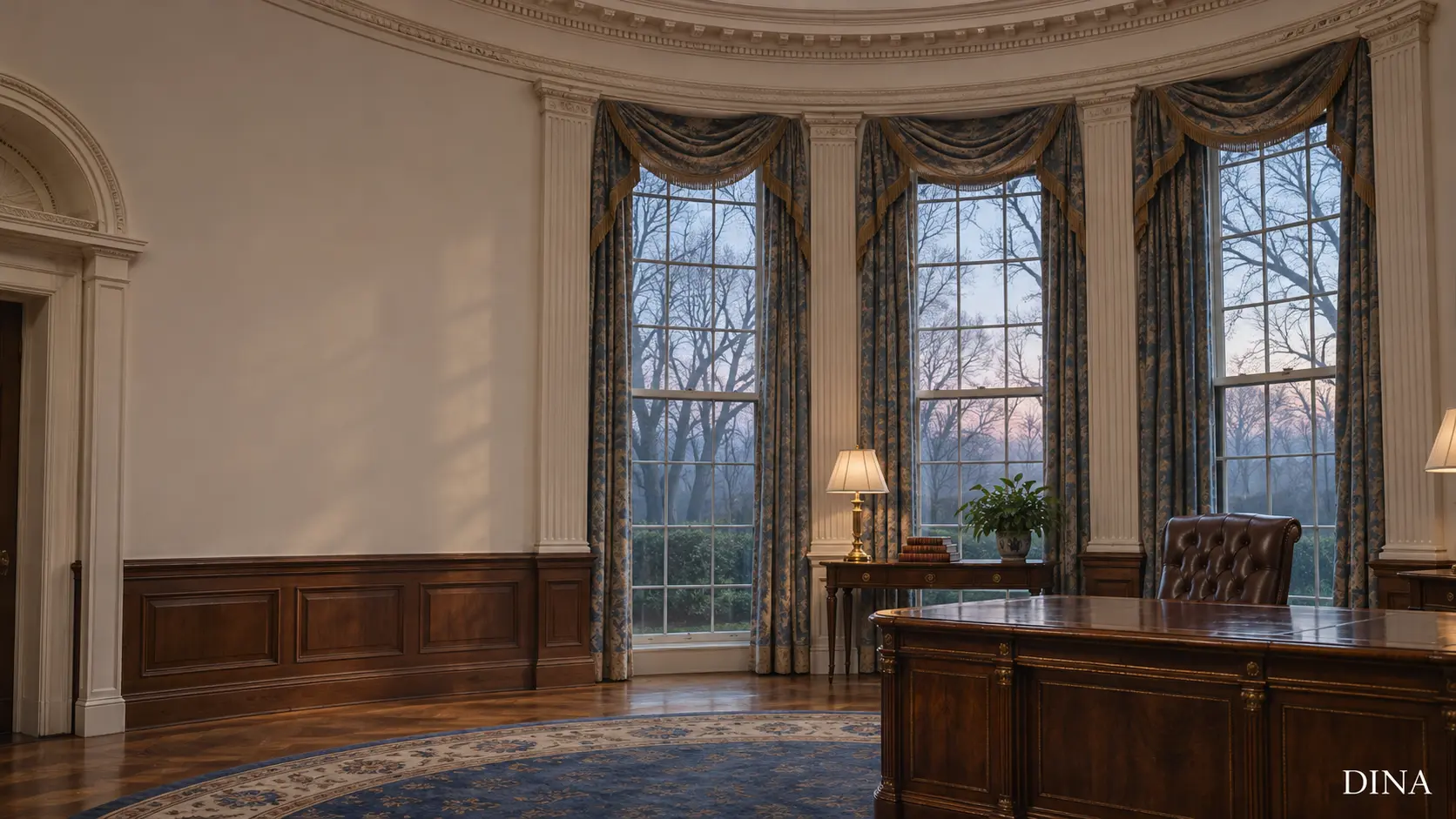
WASHINGTON — November 6, 2026: President Donald Trump has designated the Oval Office, the Outer Oval Office and the Cabinet Room as a national monument, directing the Interior Department and National Park Service to create a preservation-management plan for the three West Wing spaces.
The proclamation, signed November 5 and published by the White House, invokes the Antiquities Act provision now codified at 54 U.S.C. § 320301. That law permits a president to declare historic landmarks and structures on federally owned or controlled land to be national monuments.
The designation is real, but its limits are narrower than some of the president's accompanying remarks suggested. The text requires documentation, review and consideration of alternatives before an action that would substantially alter or demolish the protected spaces. It expressly preserves a president's authority to redecorate, select furnishings and make ordinary operational or security modifications that do not substantially impair historic structure or architectural character.
What the proclamation does
The monument consists of the Oval Office, identified as Room 110; the Outer Oval Office, Rooms 106 and 108; and the Cabinet Room, Room 105. The proclamation describes those boundaries as the smallest area compatible with caring for the historic objects and spaces.
It directs the Interior secretary, through the National Park Service, to:
- develop a management plan with the White House Office of Administration and other relevant agencies;
- prioritize structural and significant architectural preservation;
- require documentation, review and consideration of alternatives before substantial alteration or demolition;
- evaluate proposed changes for consistency with the monument's national significance; and
- coordinate with the Committee for the Preservation of the White House and other advisory bodies.
The National Park Service already describes the White House as publicly owned and NPS-stewarded. President's Park has multiple overlapping functions: executive workplace, official residence, historic property, military and security environment, museum and public landscape. The proclamation does not displace those operational and security roles.
What it does not do
The proclamation does not freeze the rooms as they appear today. It explicitly permits redecorating, furnishing decisions and ordinary operational or security changes. It also says it does not alter existing statutory exemptions applicable to the White House under the National Historic Preservation Act or diminish Congress's constitutional authority over federal property.
The document contains no language requiring Congress to approve every major future change. Associated Press reporting notes that a future president could attempt to revise or revoke the proclamation. The precise legal limits of presidential monument modification can generate litigation, so DINA does not treat eventual reversal or permanence as settled by this signing alone.
DINA analysis: A national-monument label is not self-executing preservation. The enforceable record will be the management plan and the procedures it creates: which physical features are considered essential, who reviews proposals, whether written findings are published and what happens if security or presidential-use claims conflict with preservation advice.
Why it matters
The Oval Office and Cabinet Room are active governing spaces where presidents meet advisers, foreign leaders and members of Congress. Designating working rooms rather than a landscape or archeological site raises unusual operational questions about access, preservation, security and executive control.
The decision also comes during heightened scrutiny of White House and Washington construction projects. A federal judge separately paused work on Trump's proposed 250-foot Washington arch for 14 days. The monument proclamation and the arch litigation are distinct actions governed by different records; one does not decide the legality of the other.
Strongest accountability angle
The strongest accountability test is whether the administration publishes a detailed, professionally prepared management plan that defines the protected architectural elements, identifies responsible officials and advisory bodies, describes review and appeal procedures, and discloses costs and funding sources without compromising security.
A second test is consistency. The administration says the new designation protects historic character while the proclamation preserves broad presidential control over decoration and ordinary modifications. The public record should show where preservation review begins, what changes require written alternatives and whether the same standards apply regardless of which president proposes the work.
Urgent follow-up and public records
- Obtain the executed proclamation, signing record and any legal memorandum interpreting 54 U.S.C. § 320301 as applied to interior White House rooms.
- Request the Interior and NPS implementation directive, project charter, management-plan schedule, responsible offices and estimated costs.
- Request a redacted inventory of the structural and architectural features the proclamation treats as historically significant.
- Obtain Committee for the Preservation of the White House agendas, recommendations and records concerning the designation and management plan.
- Request written criteria distinguishing routine redecoration and security work from substantial alteration requiring alternatives review.
- Identify the appropriation, transfer or operating account that will fund planning, documentation, conservation and future compliance.
- Track publication in the Federal Register and any subsequent Interior secretary order, National Park Service record or congressional response.
Primary and corroborating sources
- White House — November 5 proclamation establishing the Oval Office National Monument
- White House — fact sheet describing the designation and management directives
- Office of the Law Revision Counsel — 54 U.S.C. § 320301, national monuments
- National Park Service — the White House and President's Park
- National Park Service — President's Park purpose and preservation responsibilities
- National Archives — Executive Order 11145 establishing the Committee for the Preservation of the White House
- Associated Press — proclamation, redecorating exception and legal limitations