
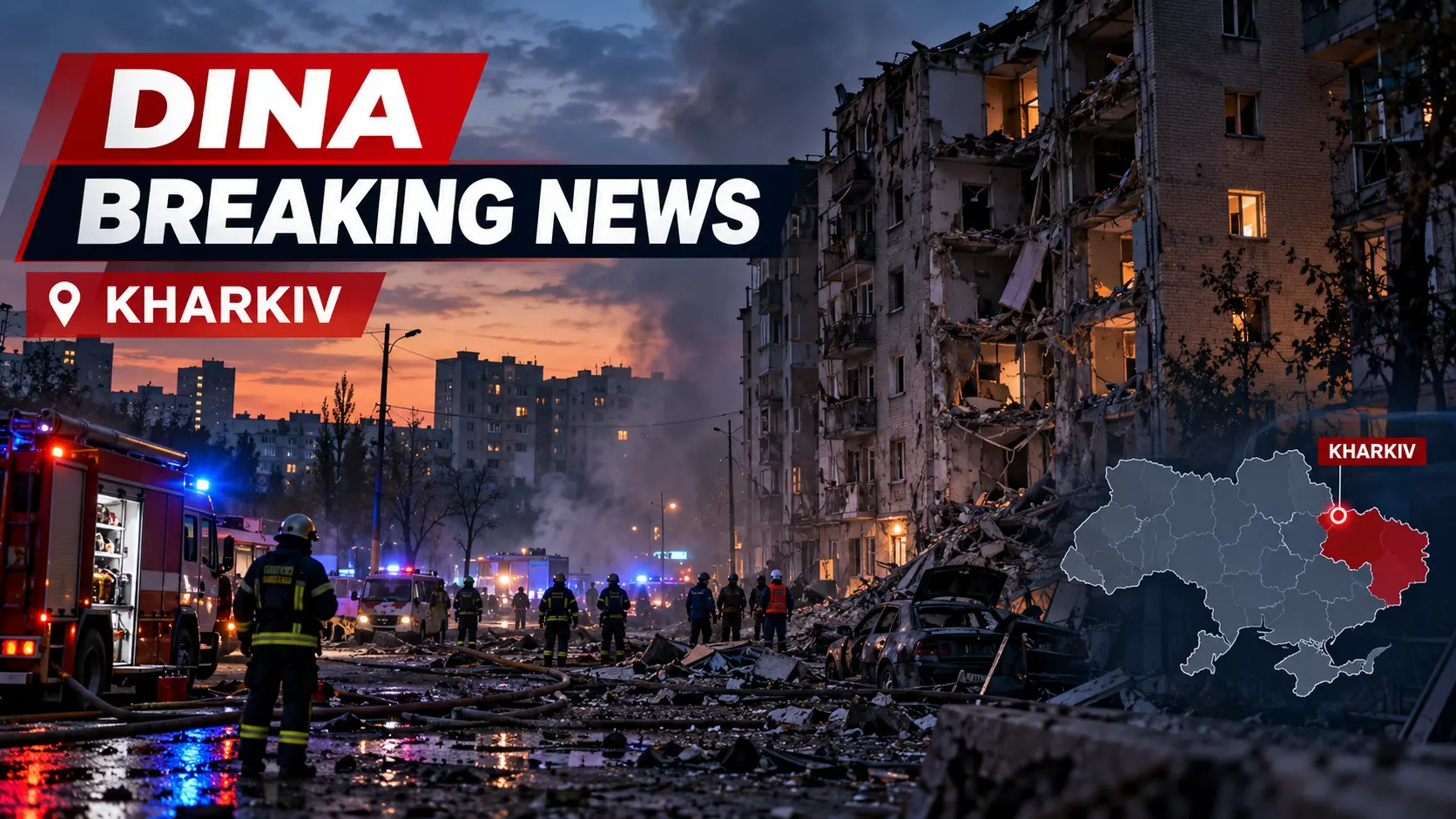
KHARKIV, Ukraine — Russian bombs struck multiple parts of Kharkiv on Monday, killing six people and injuring 59, according to regional and city officials. Three children were among the injured. Thirty people were being treated in hospitals, including three in serious condition, regional governor Oleh Syniehubov said.
Reuters reported from Kharkiv that apartment facades, balconies and interiors were shattered and that warehouses were also damaged. Mayor Ihor Terekhov said emergency crews recovered three bodies from rubble. The city, Ukraine’s second largest, sits roughly 30 kilometers from the Russian border and has endured repeated attacks since Russia’s full-scale invasion began in 2022.
What is confirmed
The casualty figures and the report that three bombs hit different areas of the city come from Ukrainian regional and local officials. Reuters journalists documented the aftermath and spoke with residents at the scene. The reported toll may change as rescue work, hospital treatment and identification continue.
Officials also reported a Russian drone strike on an apartment building in Zaporizhzhia that injured three people, and an air strike that killed one person in Sloviansk. Those incidents show that Monday’s violence was not confined to Kharkiv.
What is not yet established
DINA has not independently identified the aircraft, munition models, launch locations or intended targets. Public reporting available Monday did not include a Russian military account of the Kharkiv strikes. Damage to homes and civilian casualties are documented; the attacker’s claimed targeting rationale and the complete strike record are not.
That distinction matters under international humanitarian law. Civilian objects may not be deliberately attacked, and parties must distinguish military objectives from civilians and take feasible precautions to limit civilian harm. Whether a particular strike violated those rules requires evidence about the target, weapon, timing, intelligence and precautions—not only photographs of destruction.
Why this matters
The verified human cost is immediate: six lives lost, nearly 60 people injured and residents displaced from damaged buildings. Repeated attacks also create longer-term burdens on hospitals, emergency crews, housing systems and municipal budgets. Kharkiv’s proximity to the border shortens warning time and leaves civilians exposed to a range of weapons.
The strike is also a test of accountability. Every casualty number should ultimately connect to a name, a medical record or a documented identification process. Every damaged building should connect to an address, inspection and repair or relocation plan. That record serves survivors now and any future criminal or civil investigation.
DINA analysis
The strongest independent reporting angle is not to convert grief into spectacle. It is to follow the public record from emergency call to hospital, from damage assessment to housing assistance, and from recovered fragments to a defensible finding about responsibility.
Ukrainian officials should publish a consolidated incident report when operational security permits: strike times and locations, casualty revisions, damaged residential and commercial properties, emergency-response timelines and the status of any unexploded ordnance. Investigators should preserve fragments, crater measurements, surveillance video and witness accounts. Russia should state whether its forces conducted the strikes, identify any claimed military objective and disclose the precautions it says were taken.
Until those records are available, DINA distinguishes the established facts—the deaths, injuries and widespread damage—from the still-unresolved questions of exact weapon, intended target and legal responsibility for each impact.
Sources and follow-up records
- Reuters — Russian attack kills six in Kharkiv and shatters residences
- Kharkiv regional governor Oleh Syniehubov — official Telegram channel
- Kharkiv Mayor Ihor Terekhov — official Telegram channel
Urgent follow-up: casualty and hospital updates; the State Emergency Service incident log; municipal building-safety assessments; weapon-fragment analysis; any Russian operational statement; and records of temporary housing and victim assistance.