
Breaking news · U.S.–Iran war · Diplomacy · Sanctions · Election accountability · DINA analysis
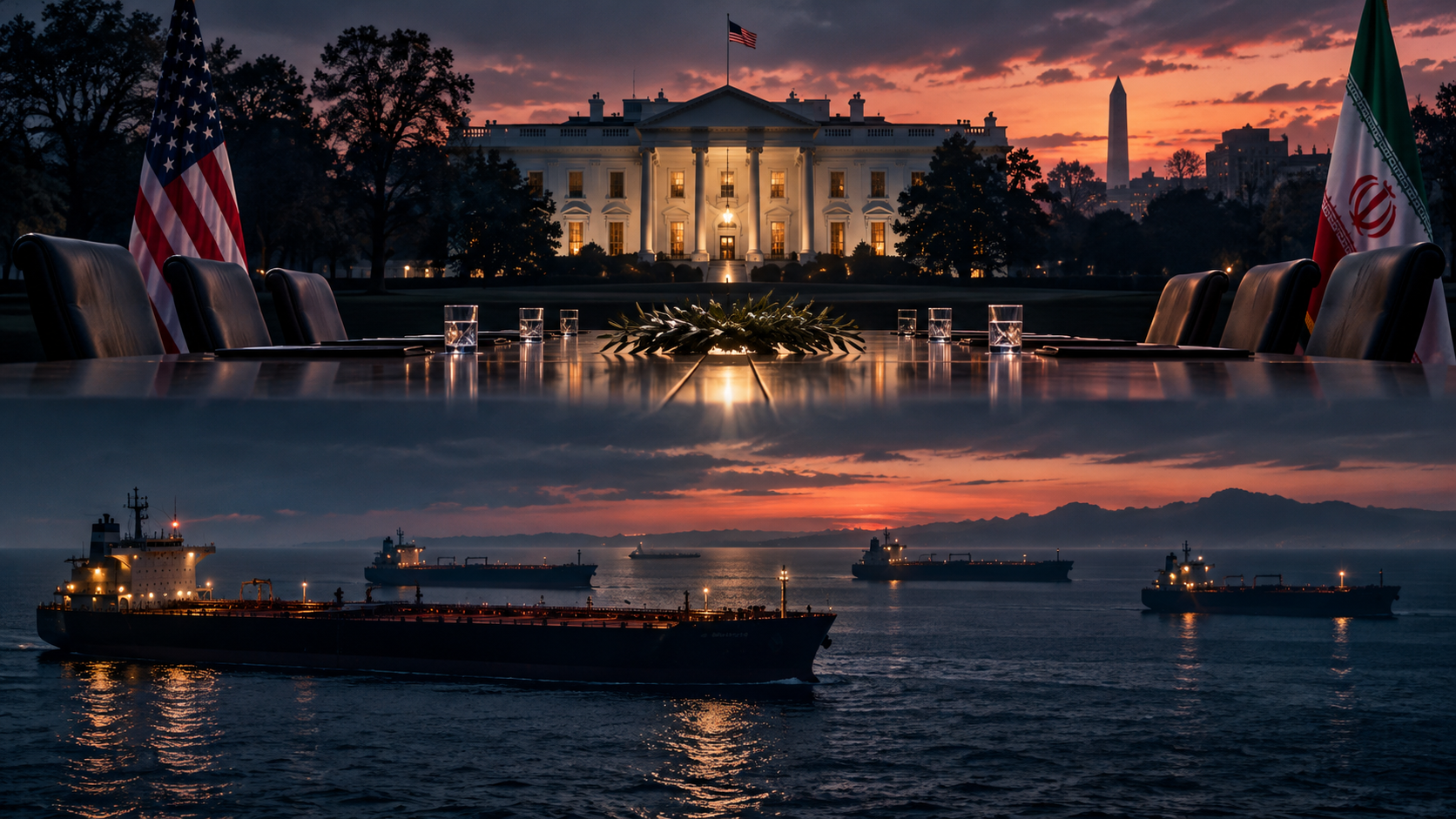
WASHINGTON — President Donald Trump said Thursday that the United States would not attack Iran before the November 3 midterm elections, describing U.S.-Iran discussions as “productive” while stopping short of announcing a ceasefire or a settlement to the six-month war.
“We will not be attacking Iran at any time prior to the midterm elections to be held in the United States on November 3rd,” Trump wrote on Truth Social, according to Reuters. The statement is a direct, time-limited presidential commitment. It does not say what the United States will do after Election Day, whether defensive operations are excluded, or whether U.S. allies are bound by the pledge.
Hours later, the U.S. Treasury Department announced sanctions against 17 vessels and associated owners and operators that it says transported Iranian crude oil, petroleum products or petrochemicals. Treasury called the action part of “Operation Economic Outcast” and said it was taken under Executive Order 13902, which authorizes sanctions targeting sectors of Iran's economy.
The two developments place diplomacy and coercion side by side: the administration is publicly limiting near-term offensive action while intensifying financial pressure on Iran's oil trade.
What is confirmed
- Presidential statement: Trump said the United States would not attack Iran before the November 3 election and characterized the talks as productive.
- No announced peace agreement: Neither government announced a ceasefire, armistice or final diplomatic accord.
- Sanctions action: Treasury identified 17 vessels and a network of owners or operators under Executive Order 13902.
- Scope of the sanctions: The designations generally block property or interests in property subject to U.S. jurisdiction and prohibit most transactions by U.S. persons with designated parties. A designation is not, by itself, a physical seizure of a vessel.
- Treasury's characterization: The department said the action “effectively neutralizes the vast majority” of Iran's remaining shadow-fleet network. That is the administration's assessment; DINA has not independently measured the fleet's remaining capacity.
What remains unresolved
Reuters reported that Washington and Tehran have exchanged proposals aimed at ending the war and reopening the Strait of Hormuz, but Trump rejected Iran's latest offer. Iran's state media reported Thursday that Tehran would not abandon uranium enrichment or surrender its uranium stockpile. Those positions leave the central nuclear and sanctions questions unsettled.
The White House had not published a detailed framework defining “attack,” explaining whether the pledge covers covert action, cyber operations, support to allied strikes or responses to an imminent threat. The administration also had not disclosed the text of the proposals exchanged with Tehran.
Why it matters
A presidential promise not to initiate an attack for nearly four weeks reduces immediate escalation risk, but its election-linked deadline introduces uncertainty. Military posture, commercial shipping and energy prices can react not only to what the United States intends today, but also to what officials signal may happen after November 3.
The timing also connects foreign policy to domestic politics. Reuters reported that the conflict has pushed gasoline prices higher and cited a recent Reuters/Ipsos poll in which 60% of Americans disapproved of Trump's handling of Iran. The president's statement does not prove an electoral motive, but choosing Election Day as the endpoint makes election accountability a legitimate subject for scrutiny.
DINA analysis: a pause with a visible expiration date
DINA analysis: The statement is significant because it narrows the near-term risk of a new U.S. attack, but readers should resist treating it as peace. It is a unilateral public commitment with an expiration date, not a jointly verified ceasefire.
The simultaneous sanctions package reinforces that distinction. Washington is shifting part of its pressure from the battlefield to shipping, finance and access to the U.S. economic system. That may create leverage for talks, but it can also harden Tehran's position, redirect trade through more opaque networks and raise compliance costs for legitimate carriers, ports, insurers and banks.
The strongest accountability question is what changes at midnight after the election. Congress and the public need to know whether the administration has defined post-election military options, what legal authority it claims, and what measurable diplomatic benchmarks would extend restraint beyond November 3.
Urgent accountability questions
- Will the White House publish the full U.S. proposal to Iran and define the military activities covered by the president's pledge?
- Does the commitment cover cyber operations, covert action, support to allied strikes and attacks on Iranian vessels outside territorial waters?
- What objective criteria would extend the pause after November 3?
- What War Powers reporting has the administration provided to Congress, and what authority does it claim for any renewed attack?
- What independently auditable evidence supports Treasury's claim that the new designations neutralize most of Iran's remaining shadow fleet?
- How will Treasury guard against mistaken vessel identification, sanctions evasion through reflagging, and unintended disruption to lawful humanitarian or commercial trade?
- Will the administration disclose estimates of the sanctions' likely effects on global oil supply, shipping insurance and U.S. fuel prices?
Related DINA coverage
- Iran Warns Regional Oil Routes May Be Treated as Hostile, Sources Say
- N.C. Fuel-Tax Holiday Reaches Stein as Maersk Raises Surcharge
- Lufthansa, Air India Suspend Riyadh Flights as Houthi Attacks Disrupt Airport