
Breaking news · Russia–Ukraine war · Export controls · National security · Federal courts · DINA analysis
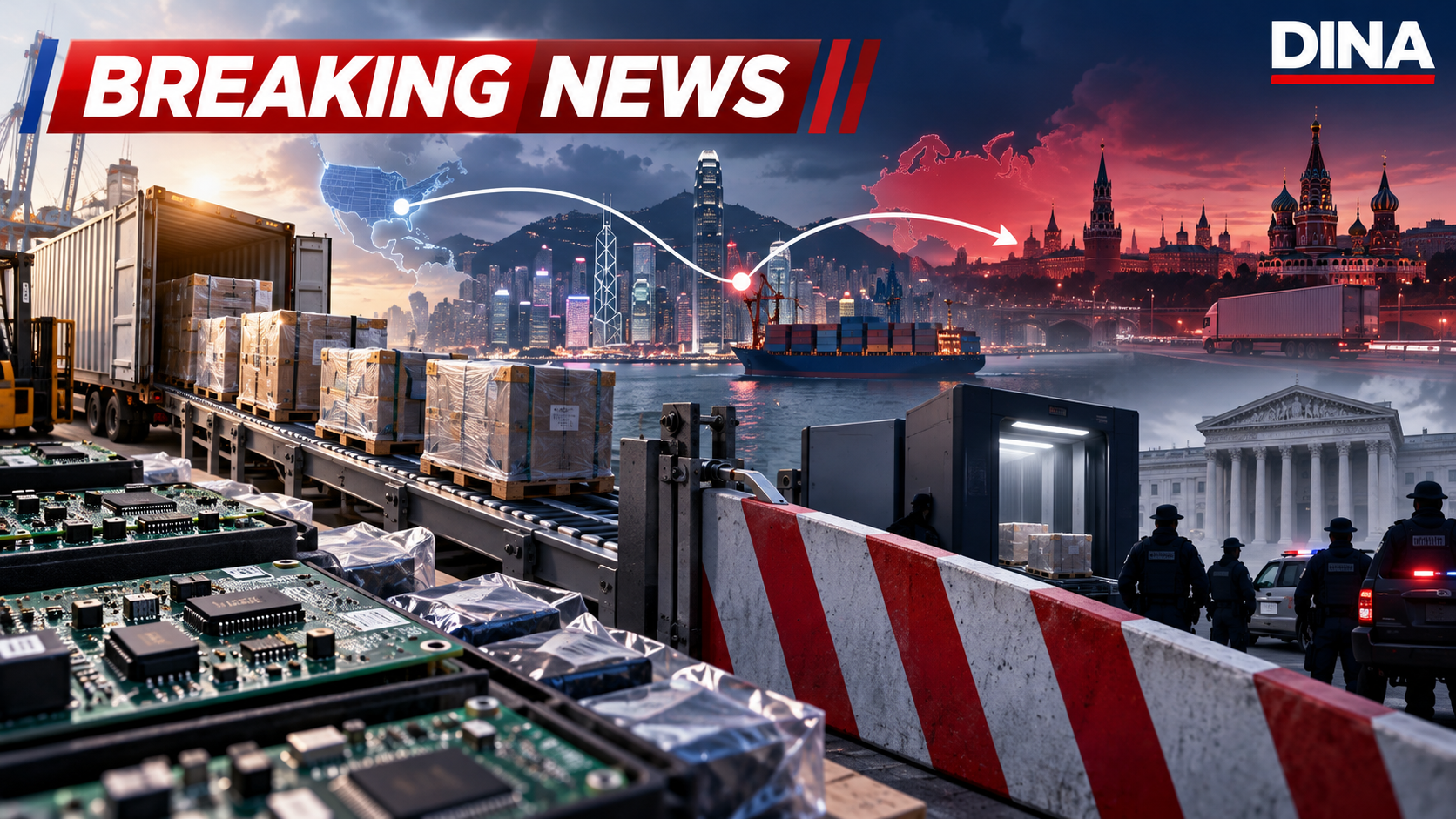
ALBANY, N.Y. — October 15, 2026, 8:37 p.m. ET: Sweden extradited Russian national Alexander Suvorov to the United States on Thursday to face federal charges alleging that he led a procurement network that routed American dual-use microelectronics through Hong Kong companies to customers in Russia after the full-scale invasion of Ukraine began.
The Justice Department said Suvorov, 52, is expected to make his initial appearance Friday, October 16, in federal court in Albany. His extradition and the filing of the complaint are confirmed. The claimed smuggling, money-laundering and export-control conduct is the government's allegation and has not been proved in court.
Presumption of innocence: A criminal complaint is an accusation, not a conviction. Suvorov is presumed innocent unless and until the government proves guilt beyond a reasonable doubt.
What prosecutors allege
According to the Justice Department, the complaint alleges that from approximately March 2022 through April 2023 Suvorov operated a network that acquired microelectronics from U.S. manufacturers and distributors and transshipped them to Russia through front companies in Hong Kong, including GS Group Limited.
Prosecutors say the components had potential military applications in communications, radar and precision-location systems. The government has not publicly established in the announcement that every component reached a military end user, nor does the release identify each U.S. supplier, shipment, part number, export-control classification or final Russian recipient.
The complaint charges conspiracy to commit international promotional money laundering, which carries a statutory maximum of 20 years; outbound smuggling, with a maximum of five years; and conspiracy to violate the Export Control Reform Act, with a maximum of 20 years. Those are maximum penalties, not a forecast of any sentence. Any sentence would depend on a conviction and a judge's application of federal law and sentencing rules.
The FBI and the Commerce Department's Bureau of Industry and Security are investigating. The Justice Department's Office of International Affairs worked with Swedish authorities to secure the extradition.
Why it matters
Export controls are one of the principal tools the United States and allied governments use to limit Russia's access to technology that can support weapons, surveillance and battlefield communications. Enforcement becomes difficult when procurement networks use intermediaries, re-export hubs and companies that obscure the true buyer.
The extradition is therefore a meaningful enforcement milestone: it brings an accused network operator into a U.S. courtroom, where prosecutors must disclose and defend evidence under judicial scrutiny. It does not itself prove that the alleged network worked as charged or that U.S. controls were effective.
DINA analysis
This section is independent analysis, not a government finding. The accountability story extends beyond one defendant. If U.S.-origin components moved through Hong Kong to Russia for more than a year, investigators and regulators should establish where screening failed, what warnings suppliers received and whether the transactions exposed repeat weaknesses in distributors, freight forwarders, banks or export-licensing systems.
The government should also distinguish potential military use from demonstrated military delivery. The public needs the component classifications, quantities, dollar values and verified end users—not only a general description of dual-use technology. That evidence will determine whether this case documents a significant military procurement channel, a disrupted attempted channel or a narrower series of unlawful commercial transactions.
Sweden's role matters as well. Cross-border sanctions enforcement depends on evidence that satisfies multiple legal systems. The extradition shows cooperation, but transparency about the Swedish proceeding and the terms of surrender would help the public evaluate how allied enforcement operates in practice.
Strongest accountability questions
- Which U.S. manufacturers and distributors supplied the components, and when did they learn the asserted end users were inaccurate?
- What exact parts, quantities and dollar values were shipped, and which export-control classifications applied?
- Did any component reach a Russian military, intelligence or defense-industrial end user?
- Which banks, freight forwarders and customs brokers processed the transactions, and what compliance alerts were triggered?
- Did the Commerce Department deny licenses, issue warnings or add any involved entity to a restricted-party list before the alleged shipments ended?
- What evidence links Suvorov personally to the transactions attributed to the broader network?
- What findings did Swedish courts make before ordering extradition, and were any charges or evidence excluded?
Urgent records and follow-up requests
- Obtain the unsealed criminal complaint, supporting affidavit, arrest warrant and initial-appearance record.
- Request shipment manifests, invoices, purchase orders, wire records and export declarations cited by prosecutors.
- Seek the component part numbers, Export Control Classification Numbers and licensing determinations.
- Request Commerce Department end-use checks, detention notices, license applications, denials and voluntary self-disclosures tied to the alleged network.
- Obtain the Swedish extradition ruling, surrender order and any limitations placed on prosecution.
- Track future detention, plea, discovery and trial filings, and separate charged allegations from evidence tested in court.