
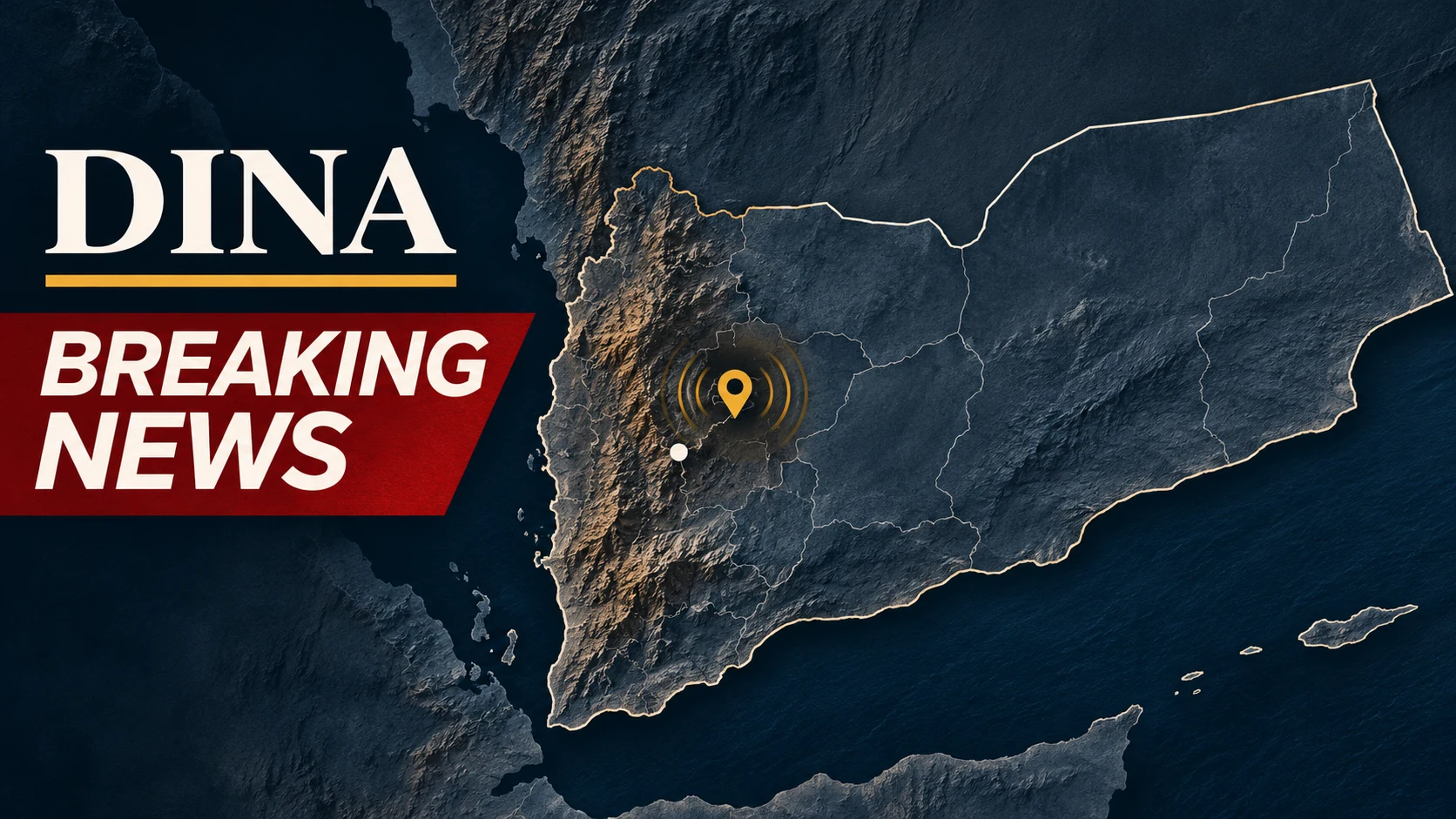
Verification status: Yemen's Houthi-run Health Ministry now reports 33 people killed and 39 wounded in al-Shariya village, northeast of Sanaa. The ministry blames Saudi Arabia. Reuters could not independently verify responsibility, and Saudi Arabia's Center for International Communication said it was investigating. The Houthi-run casualty reports contain unresolved inconsistencies.
UPDATED — SANAA, Yemen — November 7, 2026, 8:45 p.m. ET: Yemen's Houthi-run Health Ministry raised its attributed toll from strikes on homes in al-Shariya village to 33 people killed and 39 wounded. The figures and attribution are not independently verified.
A Houthi-run Saba News Agency report published shortly after 2 a.m. Sunday in Yemen described the count as near-final. It said the dead included eight women, 13 children and 12 men, while the wounded included 10 women, 13 children and 16 men. Saudi Arabia's Center for International Communication told Reuters it was investigating the report. That acknowledgment confirms an official inquiry, not Saudi responsibility or the ministry's casualty count.
The village is in Bani Hashish district, about 15 kilometers northeast of Yemen's capital. Associated Press reporting described Houthi-run television footage showing destroyed homes, wounded civilians, children receiving treatment and a wounded responder. That footage supports that a grave civilian-harm event occurred, but it does not by itself establish who launched the attack, the weapon used or the intended target.
Health Ministry spokesperson Anees Alasbahi accused Saudi Arabia of carrying out the strikes. He also alleged that later strikes targeted rescuers while people remained trapped beneath rubble. AP and Reuters said they could not independently verify the account. Saudi Arabia's Center for International Communication later said it was investigating, but no incident-specific findings were public by DINA's cutoff.
The Houthi-run Saba News Agency published a 27-dead, 36-wounded update at 6:40 p.m. local time, or 10:40 a.m. Eastern, before issuing the latest 33-dead, 39-wounded count after midnight. Earlier reports listed 25 dead and 30 wounded, 22 dead and 30 wounded, and—in another account—31 deaths. The published record therefore does not show a simple upward revision and remains internally inconsistent.
What is confirmed, alleged and unresolved
- Confirmed public record: The Houthi-run Health Ministry and Saba issued a latest toll of 33 killed and 39 wounded. AP reported footage of destroyed homes and people receiving medical care.
- Houthi allegation: Saudi aircraft struck residential homes and later targeted emergency workers and access roads.
- Saudi position: The Center for International Communication said it was investigating. It had not published incident-specific findings by DINA's cutoff.
- Not independently established: The attacking force, weapon, number of strikes, intended target, whether a military objective was present, final casualty ledger and whether rescuers were deliberately targeted.
- Unresolved reporting conflict: Saba's publications reported 31 deaths, then 22, 25, 27 and 33, without publicly reconciling the figures.
Why it matters
This is the second reported mass-casualty event in Yemen in roughly 24 hours. On Friday, at least 30 civilians were reported killed at Al-Hadara market in Taiz province, where opposing authorities blamed different forces and weapons. The latest report deepens concern that renewed fighting is returning civilians to the center of a war whose front lines had been comparatively quieter under the 2022 truce.
Under international humanitarian law, parties must distinguish civilians and civilian objects from military objectives, take feasible precautions to reduce civilian harm and protect medical personnel performing exclusively medical duties. Those rules apply regardless of which force carried out the attack. A high civilian toll or an allegation that rescuers were hit warrants an independent investigation; neither fact alone proves a war crime without evidence about the target, weapon, precautions and intent.
DINA analysis
Independent accountability analysis: The strongest immediate story is the evidence gap between a visually documented scene of severe civilian harm and an unverified attribution. Public confidence requires more than statements from a belligerent authority or silence from the accused government.
The casualty-number conflict is also consequential. Rescue operations can produce legitimate revisions, but a count that moves from 31 to 22, then 25, 27 and 33 needs a reconciled, privacy-protective ledger explaining duplicate reports, later identifications, transfers and deaths after admission. DINA treats 33 killed and 39 wounded as the latest attributed figures, not a verified final total.
The alleged follow-up strikes on rescuers demand particular scrutiny. Investigators should reconstruct the sequence minute by minute and test whether aircraft, drones or missiles remained over the area; whether emergency personnel were identifiable; and whether any secondary strike occurred after responders arrived. Until that evidence is available, the allegation must remain an allegation.
Strongest accountability angle
The decisive records are operational and forensic: coalition mission logs, radar tracks, target-development material, weapon-release data, post-strike assessments, satellite imagery, geolocated original video, crater measurements and recovered fragments with chain of custody. The responsible force should also disclose what military objective it says justified each strike and what civilian-harm precautions were taken.
Urgent follow-up and records to seek
- A reconciled casualty ledger from the Houthi-run Health Ministry, hospitals and morgues, with duplicate entries removed and personal details protected where families have not consented to publication.
- Original, geolocatable video and photographs from al-Shariya, including intact metadata and the sequence before and after rescuers arrived.
- Saudi-led coalition flight logs, radar tracks, target packages, weapon-release records and civilian-harm assessments for the reported window.
- Emergency-dispatch, ambulance and rescue-team logs showing arrival times, unit locations and any second impact.
- Satellite imagery and an independent munition-fragment examination by the United Nations, ICRC or another qualified body with documented chain of custody.
- An explanation from Saba and the Health Ministry reconciling the 31-, 22-, 25-, 27- and 33-death reports.
Sources
- Houthi-run Saba News Agency — latest Health Ministry toll of 33 killed and 39 wounded, with demographic breakdown, November 8, 2026 local time
- Reuters — revised toll, verification limits and Saudi statement that it is investigating, November 7, 2026
- Houthi-run Saba News Agency — latest Health Ministry toll of 27 killed and 36 wounded, November 7, 2026
- Houthi-run Saba News Agency — earlier toll of 25 killed and 30 wounded, November 7, 2026
- Houthi-run Saba News Agency — earlier toll of 22 killed and 30 wounded and allegations concerning rescuers, November 7, 2026
- Houthi-run Saba News Agency — earlier conflicting report of 31 deaths, November 7, 2026
- Associated Press — eyewitness imagery, official allegations, verification limits and Saudi nonresponse, November 7, 2026
- International Committee of the Red Cross — customary IHL rule on precautions in attack
- International Committee of the Red Cross — customary IHL rule protecting medical personnel
- DINA — At Least 30 Killed in Taiz Market Attack as Warring Sides Trade Blame, November 6, 2026
Verification cutoff: November 7, 2026, 8:45 p.m. Eastern. This report will be updated if independent investigators identify the weapon or responsible force, Saudi authorities issue incident-specific findings, or health authorities publish a reconciled casualty ledger.