
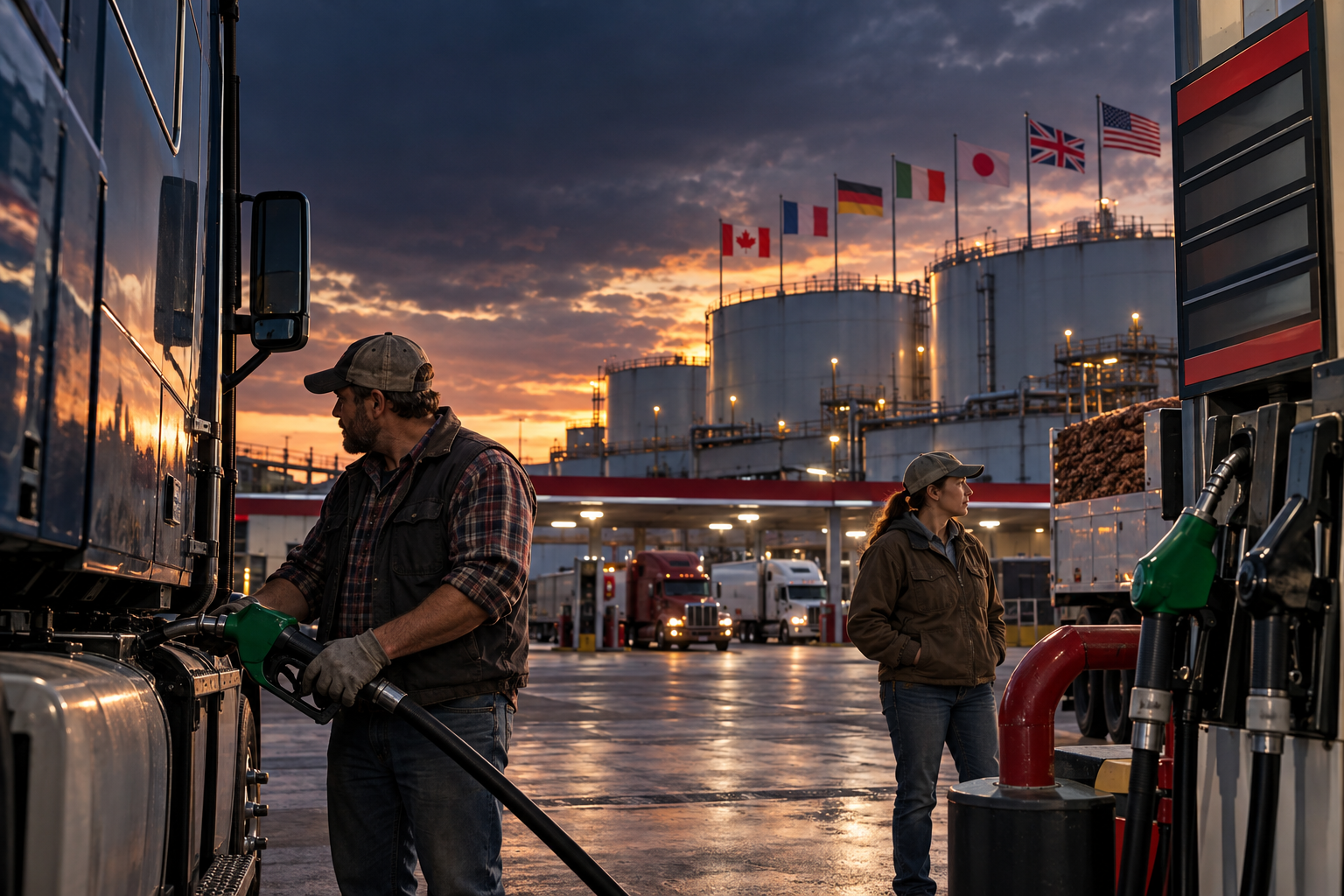
WASHINGTON — President Donald Trump said Friday that the United States will not impose the diesel-export ban his administration had been considering, hours after the Group of Seven announced a coordinated release of 100 million barrels of diesel, crude oil and other emergency reserves.
The two decisions materially change the immediate energy-policy response to fuel-price pressure linked to the U.S.–Iran war, disruptions in the Strait of Hormuz and constraints on Russian fuel exports. The G7 says the release will begin immediately, run over four months and include a front-loaded release of a substantial volume of diesel within the first 20 days.
What happened
In a joint statement issued after a virtual meeting on October 2, G7 leaders directed that the coordinated stock release proceed through the International Energy Agency. They also committed to coordinate refinery-maintenance schedules, increase refinery utilization where feasible and avoid restrictions on energy trade among G7 members.
The statement did not provide a country-by-country schedule or specify how much of the 100 million barrels would be newly released beyond commitments announced earlier in 2026. That accounting question matters because a headline total does not, by itself, reveal how much additional fuel will reach the market.
Later Friday, Trump told reporters that he would not authorize a U.S. diesel-export ban. The statement removed a policy threat that refiners, exporters and allied governments warned could tighten supplies outside the United States and trigger retaliatory restrictions.
Confirmed facts, claims and unanswered questions
Confirmed: The G7 statement commits members and partners to a 100 million-barrel coordinated release over four months, with diesel front-loaded during the first 20 days. It asks the IEA to monitor implementation and report before that 20-day period expires. Trump separately said he would not authorize a diesel-export ban.
Official position: G7 leaders say the intervention is intended to stabilize energy markets, shield households and businesses from price shocks, and preserve international fuel flows. The statement also attributes market disruption to Iranian attacks and restrictions connected with Russia’s war against Ukraine.
Not yet established: The public record does not yet show the exact U.S. contribution, the diesel-to-crude breakdown, each member’s delivery schedule, the amount that is additional to earlier releases, or the rules and price conditions for replenishing emergency stocks.
Why it matters
Diesel is embedded in the price of food, construction, trucking, farm production and emergency services. A sustained price spike can reach consumers even when they do not own a diesel vehicle. The reserve release may add supply quickly and lower near-term pressure, while the decision against an export ban reduces the risk that one government’s domestic relief measure simply shifts shortages to allies.
For North Carolina, the consequences can reach freight corridors, farms, school transportation, county fleets and household prices. The impact will depend on whether refiners and distributors convert the stock release into lower wholesale and retail prices rather than simply rebuilding private inventories.
DINA analysis
The immediate policy shift is significant, but emergency stocks are a bridge—not a substitute for diplomacy, stable shipping routes or transparent energy planning. Releasing reserves can soften a price shock; it cannot eliminate the underlying risks created by war, refinery damage and blocked trade routes.
The strongest accountability question is not whether leaders announced 100 million barrels. It is how much fuel is genuinely additional, when it will reach end users, who receives it, what safeguards prevent windfall gains, and what replenishment cost taxpayers may later bear.
A progressive public-interest analysis should also ask who receives relief first. Truckers, farmers, public transit systems and working families should be able to see whether wholesale price declines are passed through at the pump. Congress and regulators should monitor margins across the refining and distribution chain while preserving legitimate supply incentives.
Immediate accountability work
- Request the U.S. Department of Energy’s country contribution, product mix, release mechanism and delivery timetable.
- Ask the IEA to distinguish new barrels from previously announced commitments and publish weekly implementation data.
- Track wholesale diesel prices, refining margins and retail pass-through in North Carolina.
- Seek the administration’s legal and economic analysis of the abandoned export-ban option.
- Require a public replenishment plan showing timing, price assumptions and expected taxpayer cost.
Primary sources and reporting
- G7 Leaders’ Statement on Global Energy Security and Market Stability — October 2, 2026
- Office of the Prime Minister of Canada — official G7 statement release
- Reuters — Trump says he will not authorize a diesel-export ban
- Reuters — G7 coordinates 100 million-barrel emergency release
Source note: The G7 statement is the controlling source for the announced collective commitment. The president’s no-ban statement is independently reported; implementation details remain subject to agency action and subsequent disclosure.
Democracy Independent News Association (DINA)
Independent Journalism. Public Records. Accountability.