
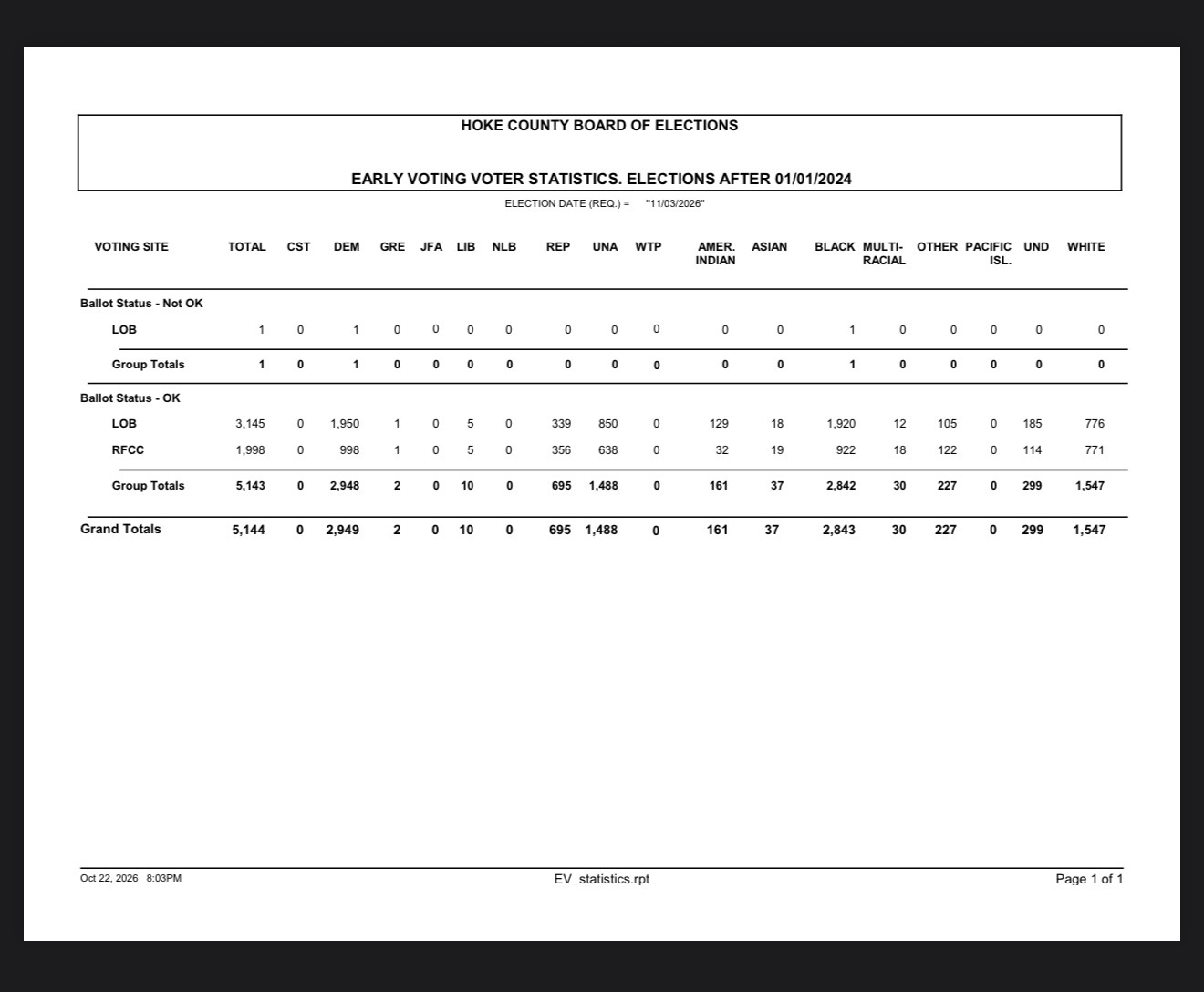
RAEFORD, N.C. — Something larger than routine midterm voting is unfolding in Hoke County. By the close of the seventh day of one-stop voting, the county election ledger showed 5,144 people recorded at the two early-voting sites. Of those, 5,143 ballots carried an “OK” status. The accepted electorate included 2,948 registered Democrats, 1,488 unaffiliated voters, 695 Republicans, ten Libertarians and two Green Party registrants. On that same October 22, the county formally celebrated another visible measure of government performance: the official ribbon cutting for the new Hoke County Justice Center.
This is not a poll, and it is not a vote count for any candidate. But it is a powerful measure of political energy. The accepted-ballot total is 52.4 percent above Hoke’s equivalent seven-day mark in the 2022 midterm and 44.9 percent above the equivalent point in 2018. Before the early-voting period is over, Hoke has already reached about two-thirds of the county’s entire final one-stop total from 2022 and more than two-thirds of the 2018 final one-stop total.
The seven-day historical comparison
DINA downloaded the North Carolina State Board of Elections’ final county absentee files for the 2018 and 2022 general elections, retained accepted one-stop records, and cut each election after its seventh day of in-person early voting. That puts October 22, 2026 against October 25, 2018 and October 27, 2022—equivalent points in the voting schedule, not merely matching calendar dates.
Accepted Hoke early ballots after seven voting days
| Registration | 2018 | 2022 | 2026 “OK” | 2026 vs. 2022 |
|---|---|---|---|---|
| Democratic | 2,213 | 1,996 | 2,948 | +47.7% |
| Republican | 617 | 630 | 695 | +10.3% |
| Unaffiliated | 708 | 746 | 1,488 | +99.5% |
| Minor parties | 11 | 3 | 12 | +300.0% |
| Total | 3,549 | 3,375 | 5,143 | +52.4% |
Democratic energy is apparent—but the unaffiliated surge is historic
Registered Democrats have cast 2,948 accepted ballots, 952 more than at the same stage in 2022. Using the county’s October 11 registration baseline, approximately 22.5 percent of registered Democrats had already voted, compared with about 8.5 percent of registered Republicans and 9.2 percent of unaffiliated registrants. Because same-day registration and routine file changes continue, those rates are approximate. The gap, however, is far too large to dismiss as rounding.
Democrats outnumber Republicans in the accepted early electorate by 2,253 ballots and by a ratio of 4.24 to one. The corresponding Democratic-to-Republican ratios were 3.59 to one after seven days in 2018 and 3.17 to one in 2022. That is a strong participation signal for Democratic campaigns at the county, state and federal levels.
But the most explosive category is unaffiliated. Its 1,488 accepted ballots are almost double the 2022 level and more than double the comparable 2018 count. Unaffiliated voters now make up 28.9 percent of Hoke’s accepted early electorate, up from 22.1 percent at the same point in 2022. They cannot responsibly be assigned to either party. Their turnout says that voters outside formal party registration believe the stakes are unusually high.
The Republican picture requires precision
It would be inaccurate to report that Hoke Republican turnout is lower in raw numbers than previous midterms. Seven-day Republican participation is 695—65 above 2022 and 78 above 2018. The defensible finding is relative underperformance: Republicans have gained only 10.3 percent over 2022 while the whole early electorate has grown 52.4 percent. Their share has fallen from 18.7 percent in 2022 to 13.5 percent in 2026, a decline of 5.2 percentage points.
Statewide, the evidence is harsher for Republicans. Through the first five days, an analysis of State Board data by The Assembly found overall turnout 38 percent above 2022, Democratic turnout up 53 percent, unaffiliated turnout up 62 percent and Republican turnout down nearly 5 percent. That statewide decline should not be silently rewritten as a Hoke County raw-count decline. Local and statewide patterns overlap, but they are not identical.
Hoke is not merely voting early. It is voting at a midterm pace that has broken decisively from the county’s 2018 and 2022 history.
What early voting can—and cannot—tell us
Early voters may simply be moving forward ballots they once cast on Election Day. Republicans have historically been more likely to vote on Election Day, and a late surge can narrow an early deficit. Party registration also does not disclose ballot choice. A registered Democrat may cross over; a Republican may leave a contest blank; an unaffiliated voter may vote a straight ideological ticket.
Still, timing is political behavior. A voter who turns out early has already converted preference, anxiety or civic commitment into a completed act. The ballot is banked. Campaigns no longer need to spend scarce time persuading that person to participate. When one side’s registrants are doing that at markedly higher rates, the organizational and enthusiasm advantage is real—even though the winner remains unknown.
National polling reinforces the participation story without converting it into a forecast. ABC News reported that 72 percent of Democratic voters said they were certain to vote, compared with 65 percent of Republicans; a Reuters/Ipsos measure found 36 percent of Democrats “very enthusiastic” compared with 29 percent of Republicans. The Associated Press found early voting more than 30 percent above 2022 in North Carolina and several other Senate battlegrounds, with Republicans accounting for a smaller share of advance voters in most of them.
The local retrospective: when concrete becomes a campaign document
Political science has long described retrospective voting: voters reward or punish incumbents for conditions and services they can observe. Research on local road quality, municipal responsiveness and school-board elections finds that performance can shape electoral accountability. But scholarship does not support the absolute claim that projects erase party, personality or candidate character. Those forces remain powerful. The narrower and stronger proposition is that visible, attributable delivery gives incumbents evidence that challengers must answer.
That matters in Hoke. County Commissioners Harry Southerland and Allen Thomas and School Board members Catherine Blue and Angela Southerland are not campaigning only on promises. They are running inside a county where voters can physically encounter the governing record. The fair formulation is collective stewardship: boards, administrators, staff, state and federal partners, contractors, educators and taxpayers all contributed. No single officeholder personally built the projects.
| Documented investment or outcome | Status and public value |
|---|---|
| Hoke County High School capital project $78,406,025 projected total; $50 million state grant; $28,406,025 county contribution; about 139,000 square feet; 1,750-seat gym. | Major educational milestone delivered and opened for students; later campus work, including demolition, tennis courts, bus and parking improvements, continues. This is a major achievement, not yet a final project closeout. |
| James A. Leach Aquatic & Recreation Center 53,000 square feet with pool, courts, track and multipurpose space. | Open since May 2023. It converted a decades-old public-pool aspiration into an operating county amenity for youth, families and seniors. |
| HATS facility and 401 PR Building | The FY2024 audit identified both as completed. Transit capacity is human infrastructure: it connects residents with employment, health care and public services. |
| West Gate Pump Station, Industrial Park Sewer Extension and Grow Hoke Sewer | The FY2024 audit recorded these utility projects as completed. Water and sewer capacity are prerequisites for housing, sanitation, industrial development and new employers. |
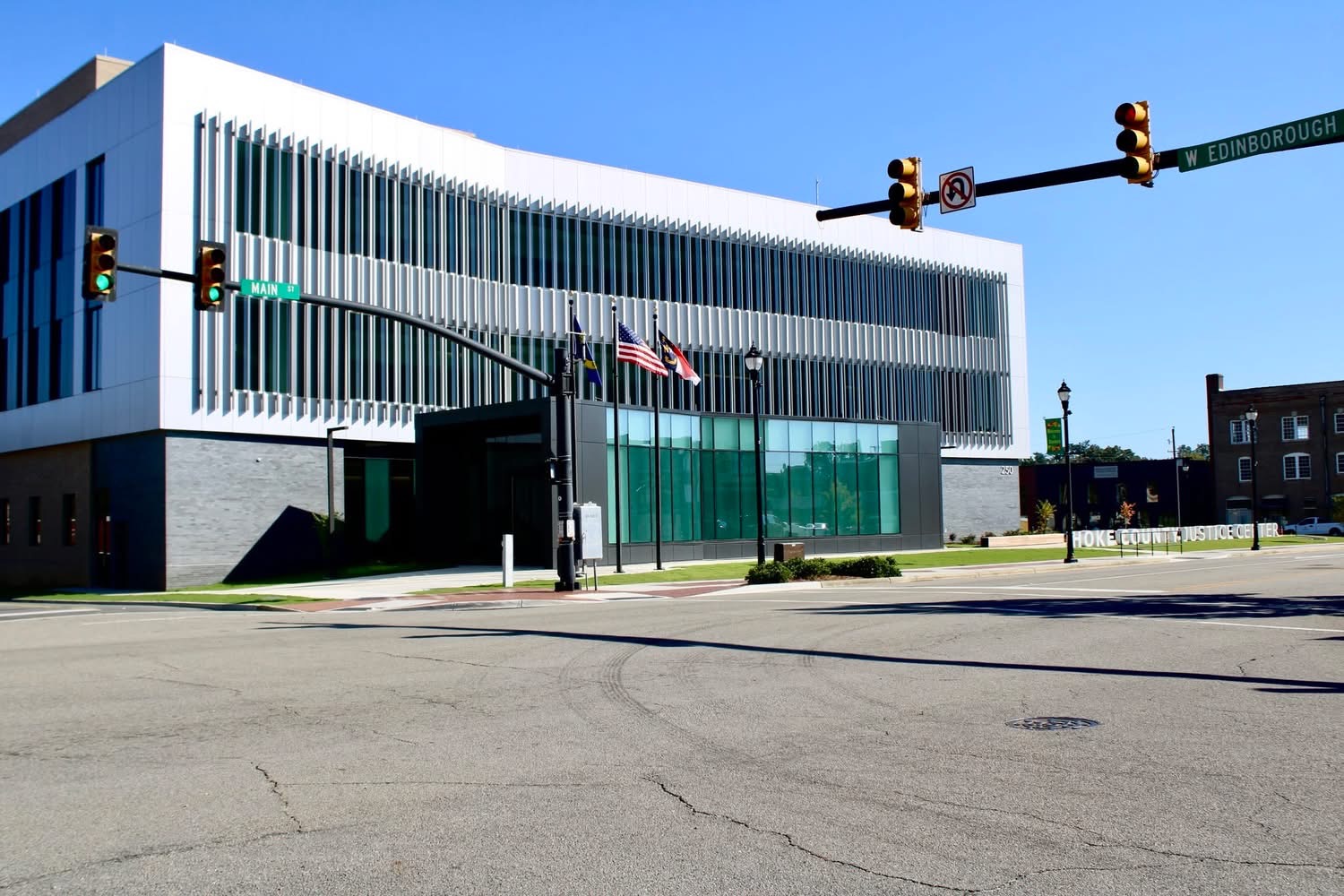
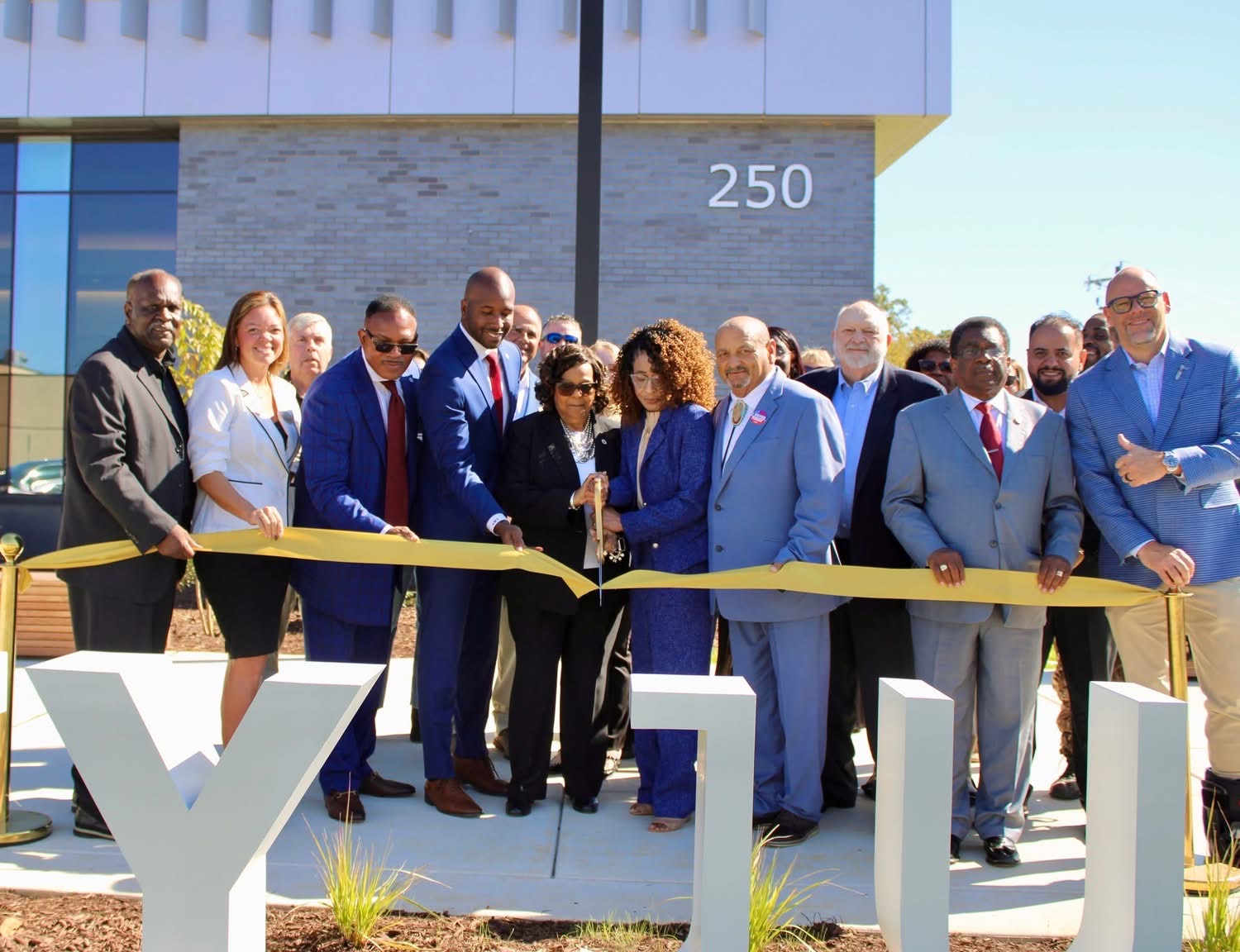
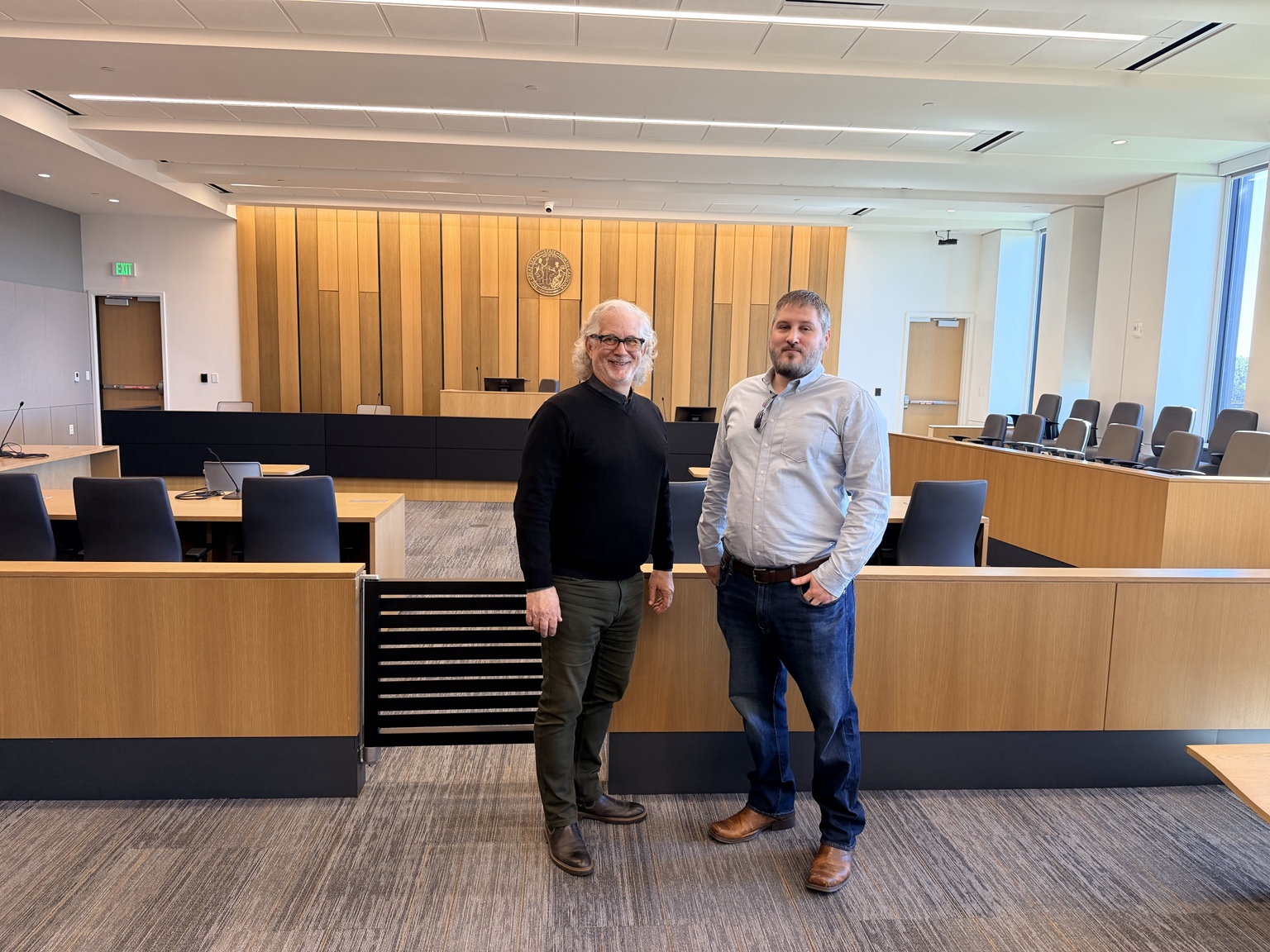
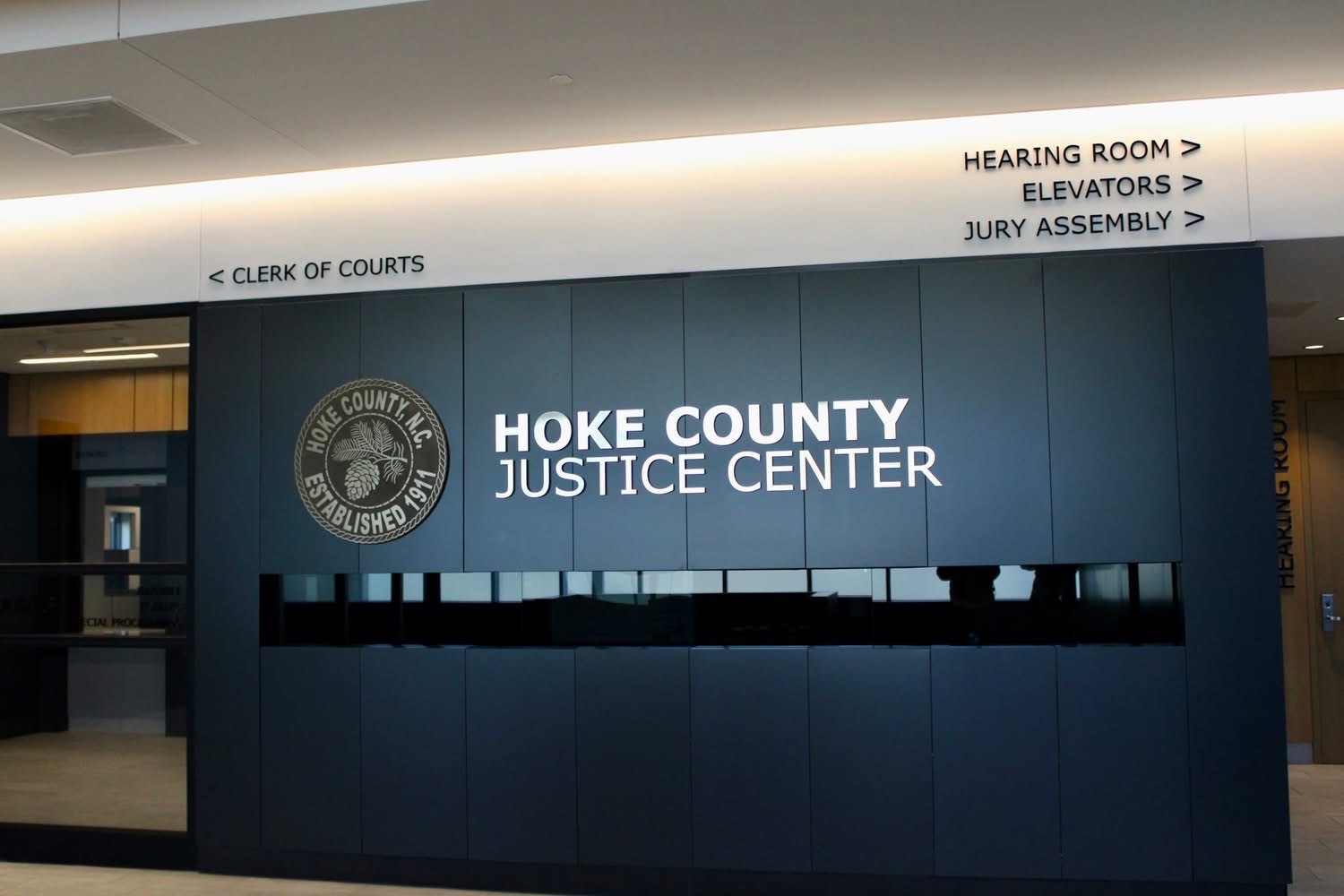
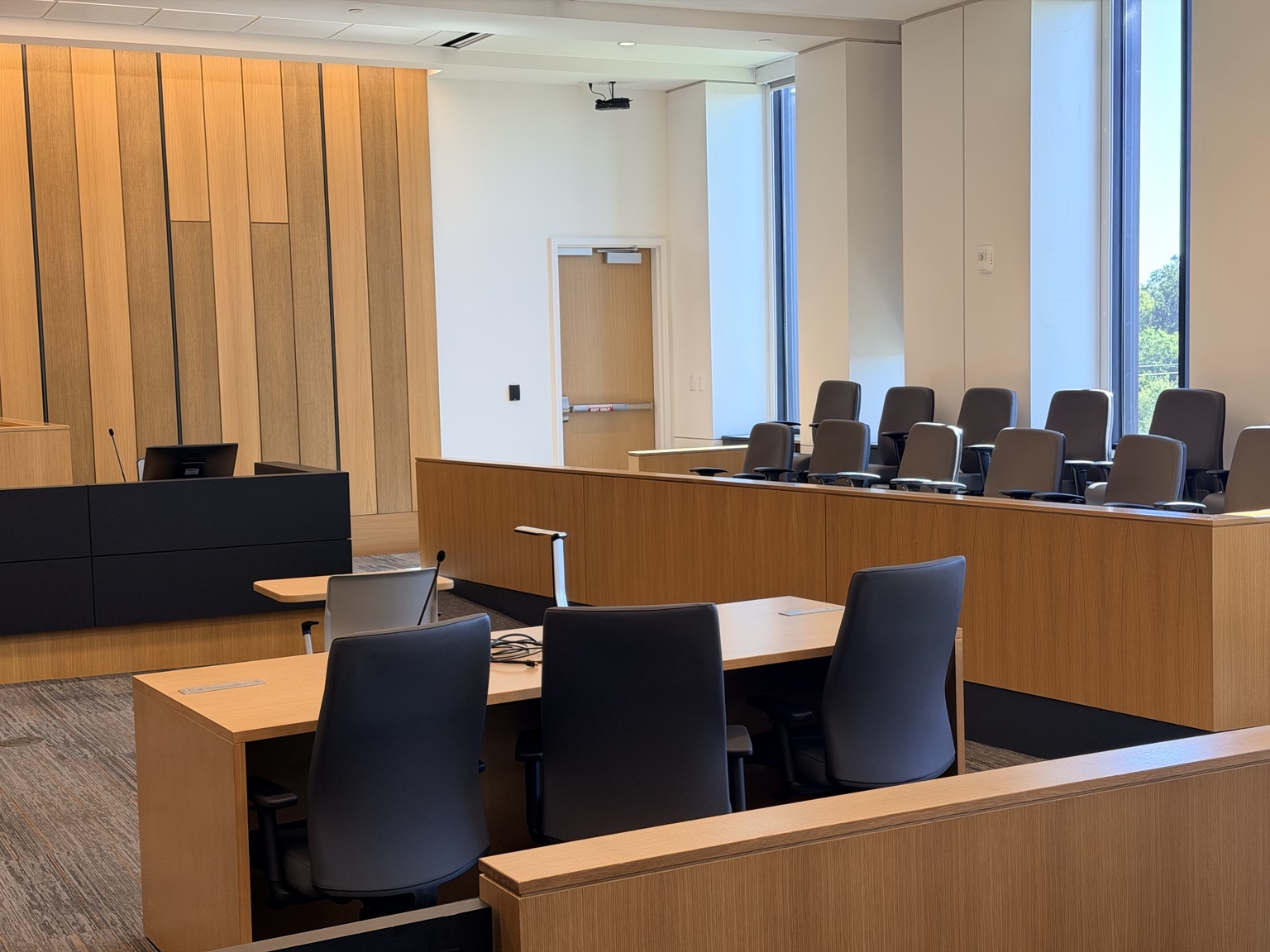
| Hoke County Justice Center Official ribbon cutting: October 22, 2026; approximately 51,000 square feet in the courthouse component; pre-opening project estimate of approximately $42.77 million; $0.00 in remaining construction debt reported to DINA. | Delivered, ceremonially opened and reported as fully paid. DINA’s photographs document the completed exterior, ceremonial ribbon cutting, public-service lobby and a fitted courtroom. According to financial information provided to DINA, no courthouse-construction principal or project balance remains outstanding. The new complex expands courtroom capacity, separates public and in-custody circulation, strengthens security and modernizes evidence presentation. Final audited cost and administrative closeout should still be reported when released. |
| CC Steele Road affordable housing | Five county-owned duplexes with three-bedroom units, full kitchens and in-unit laundry. Demand exceeded supply, exposing both the project’s value and the scale of unmet housing need. |
| Domestic-violence shelter and HATS parking expansion | Projects in development or procurement: a roughly 3,000-square-foot shelter and an approximately 20,000-square-foot HATS parking expansion. They are documented commitments, not completed facilities. |
| Proposed administration/recreation complex About $22.6 million estimated. | In April 2026 commissioners unanimously approved about $1.924 million for design and site work. The record supports “approved and moving,” not “delivered.” |
| Pennsylvania Transformer Technology expansion More than $102.5 million; 217 projected jobs; 300,000 new square feet; average salary projected at $64,949. | Groundbreaking and infrastructure coordination position the county for a potential annual payroll impact above $14 million. Incentives remain performance-based; the jobs and investment must still be realized and verified. |
| Human infrastructure | No-charge reimbursable breakfast and lunch for enrolled students, SandHoke college-credit outcomes, sustained school capital funding, senior services, recreation and transit appropriations translate buildings into household and educational capacity. |
A campaign promise becomes a civic institution
The October 22 ribbon cutting changes the Justice Center’s status in this report. It is no longer accurate to describe the project only as construction in progress or an asset in advanced development. The ceremony, completed exterior and finished interior spaces provide direct evidence that the Commission’s long-promised courthouse modernization has reached the public-opening milestone.
The project answers a documented capacity problem. The century-old courthouse had been strained by population growth, security limitations and insufficient courtroom space. Planning documents described a modern courthouse with the Clerk of Court, District Attorney, Public Defender, jury assembly and multiple courtrooms, together with safer circulation for the public, court personnel and people in custody. Earlier construction reporting placed the courthouse component near 51,000 square feet and the broader project estimate at approximately $42.77 million, largely supported by state grant funding. Those are pre-opening figures; DINA will distinguish them from final audited cost when closeout records become public.
Politically, the ribbon cutting is unusually consequential because it occurred during early voting. It gives residents immediate, observable evidence against which to test an incumbent board’s claim of delivery. The ceremony does not settle every question about cost, operations or access—but it turns a campaign promise into a building the public can see, enter and evaluate.

Are we better off than four years ago?
On the documented test of public capacity, the answer is yes. Hoke has a new high-school facility, an operating aquatic and recreation center, completed transit and utility projects, expanded housing capacity, a new Justice Center ceremonially opened on October 22 and reported to carry $0.00 in remaining construction debt, and an industrial expansion capable of adding hundreds of higher-wage jobs.
That affirmative answer is not a blank check. Water rates rose 30 percent in August 2026; affordability, access, project closeouts, school outcomes and maintenance costs remain legitimate tests. “Better” means greater capacity and tangible delivery—not that every family’s burden has disappeared.
Why Washington may be adding fuel
DINA’s progressive interpretation is that the Hoke surge is both local and national: voters can reward visible local investment while rebuking federal policies they experience as top-down and economically unequal.
The Congressional Budget Office estimates that Public Law 119-21, enacted in July 2025 with Republican support, will increase federal deficits by about $3.4 trillion from 2025 through 2034. CBO also finds that household resources decline toward the bottom of the income distribution while increasing in the middle and toward the top, with roughly $900 billion less in federal and state in-kind transfers—primarily Medicaid and SNAP—over the analysis period. Those are national projections, not claims that every Hoke household has already lost benefits.
The tariff ledger is similarly concrete. Yale’s Budget Lab estimated in August 2026 that current-law tariffs would ultimately raise consumer prices about 0.7 percent and cost the average household about $1,100 annually. Its poverty analysis estimated that the 2025 tariff package would push roughly 650,000 to 875,000 additional Americans below a poverty threshold, depending on the measure used. In Hoke, where state records listed 9,235 SNAP participants in April 2025, cuts and price pressure are not abstract seminar questions.
None of those facts establishes the private motive of one Hoke voter. The causal claim must remain an inference. But the mechanism is plausible: when groceries, fuel, insurance and housing costs dominate household conversation, voters often convert economic frustration into a judgment on the party controlling Washington. The usual midterm penalty against the president’s party can intensify when policy burdens are concentrated among working, rural, Black, Native, elderly, disabled and low-income communities.
Three tests for the remaining cycle
First, does the Democratic rate persist? The present lead is meaningful because the ballots are already cast. If Democratic registrants continue voting at more than twice the within-party rate of Republicans, GOP Election Day turnout will have to be unusually strong to compensate.
Second, where do unaffiliated voters land? They are the fastest-growing part of this early electorate. Their issue mix—cost of living, schools, infrastructure, public safety and democratic norms—will determine whether raw participation becomes partisan change.
Third, do local campaigns make the record visible? Infrastructure is politically valuable only when residents can connect the asset to a decision, a funding source and a usable service. Incumbents should show the receipts without claiming sole credit. Challengers should identify specific failures, costs or alternatives rather than asking voters to ignore concrete results.
From the polling place
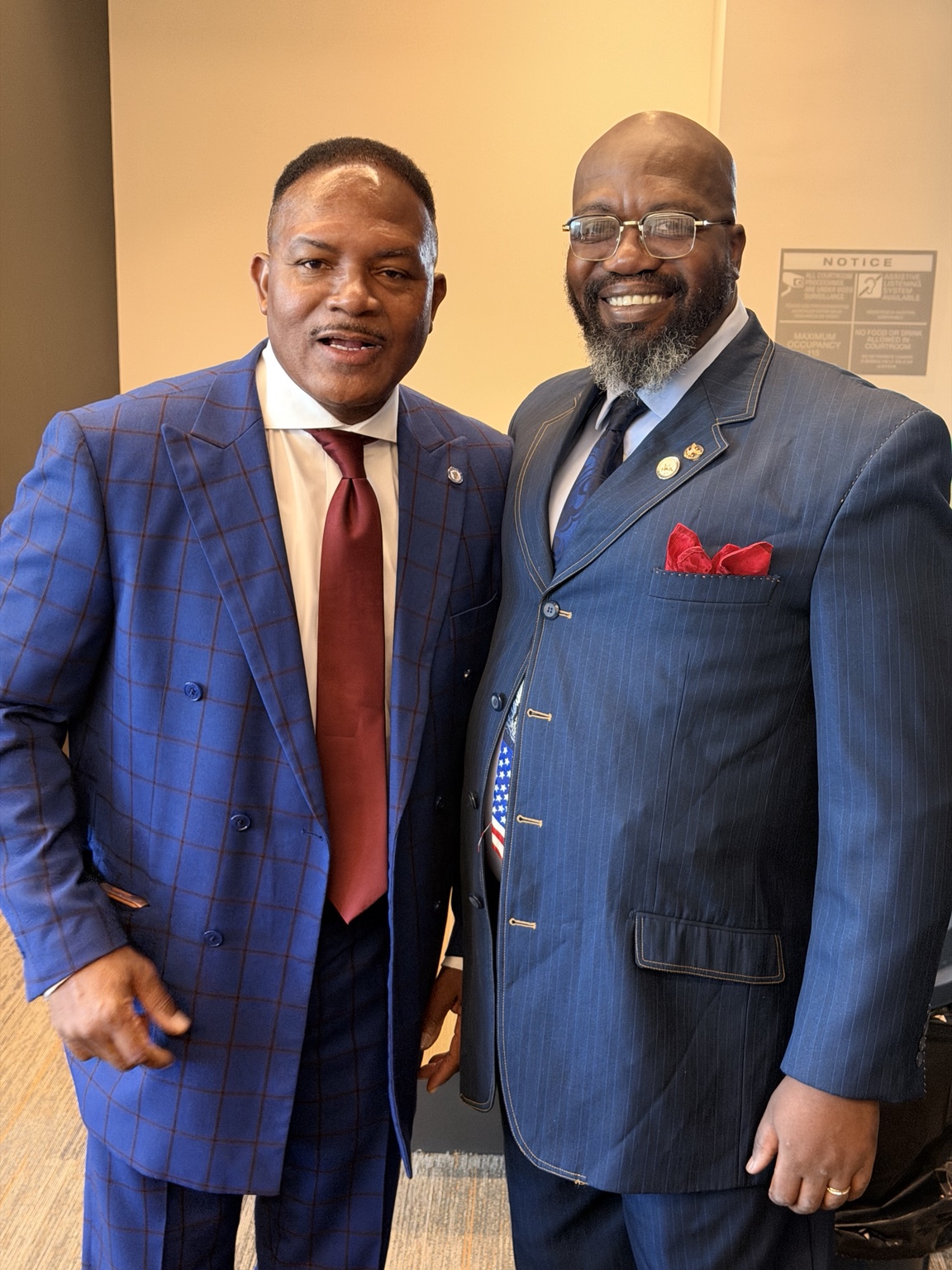
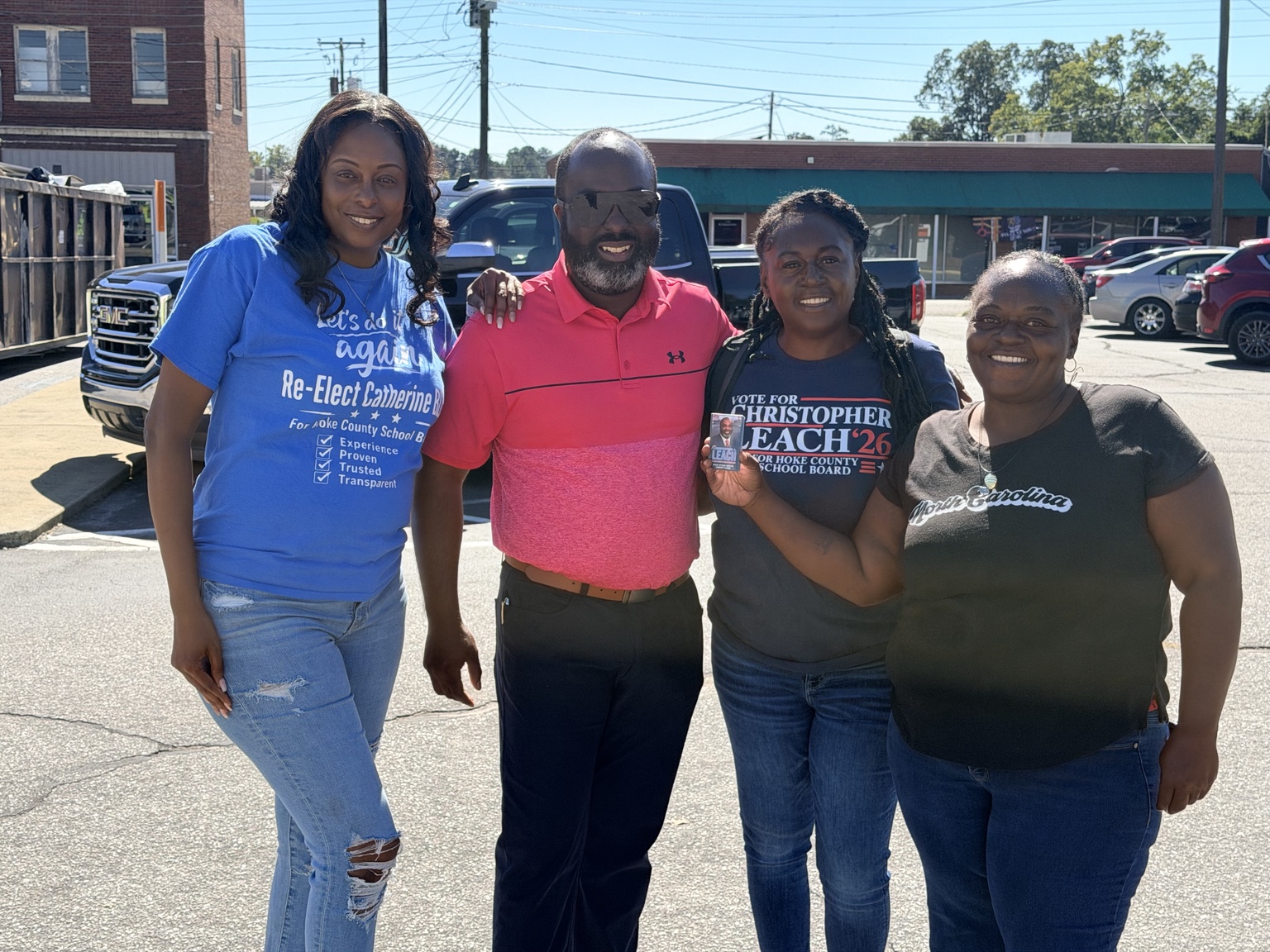
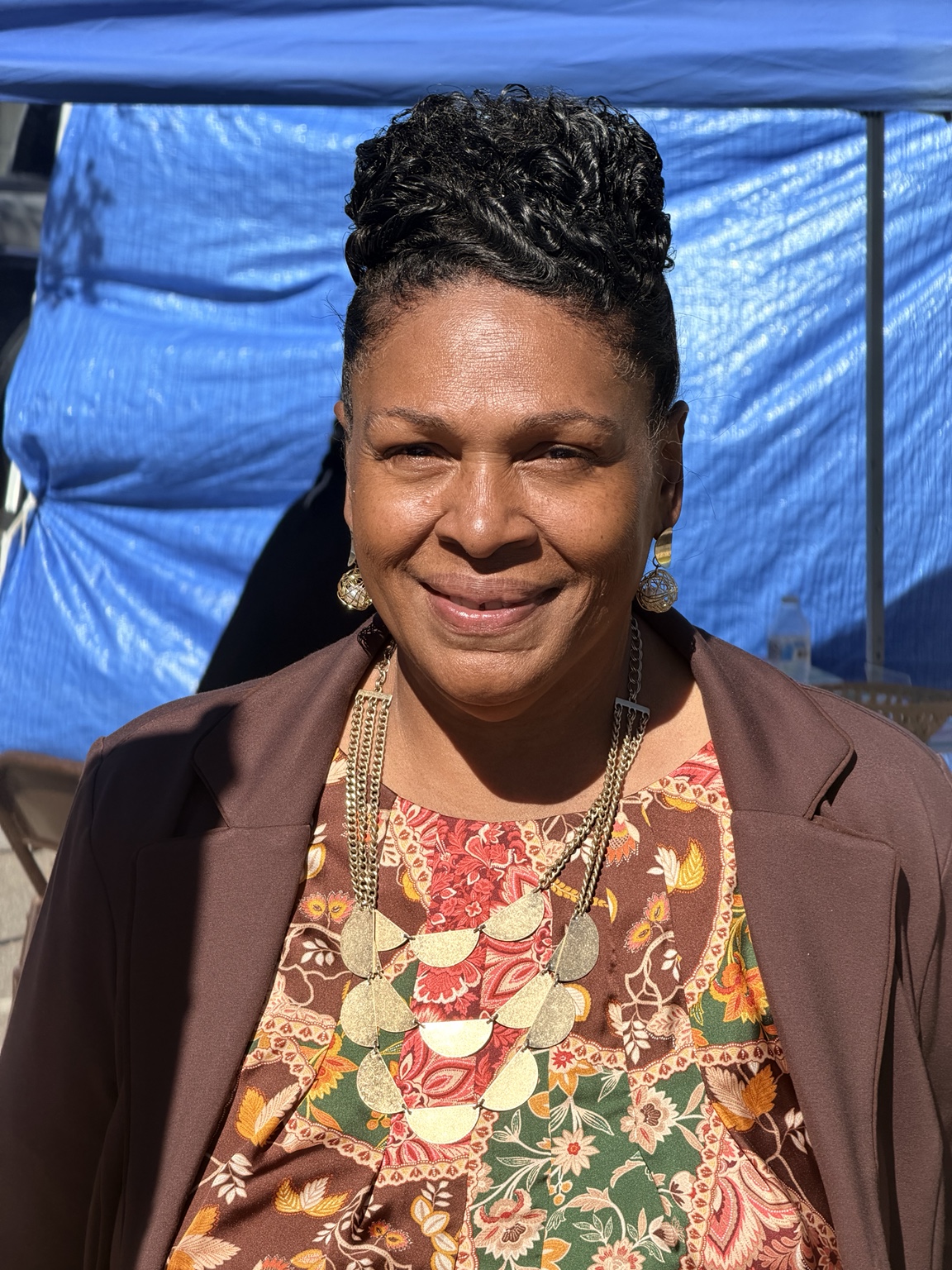
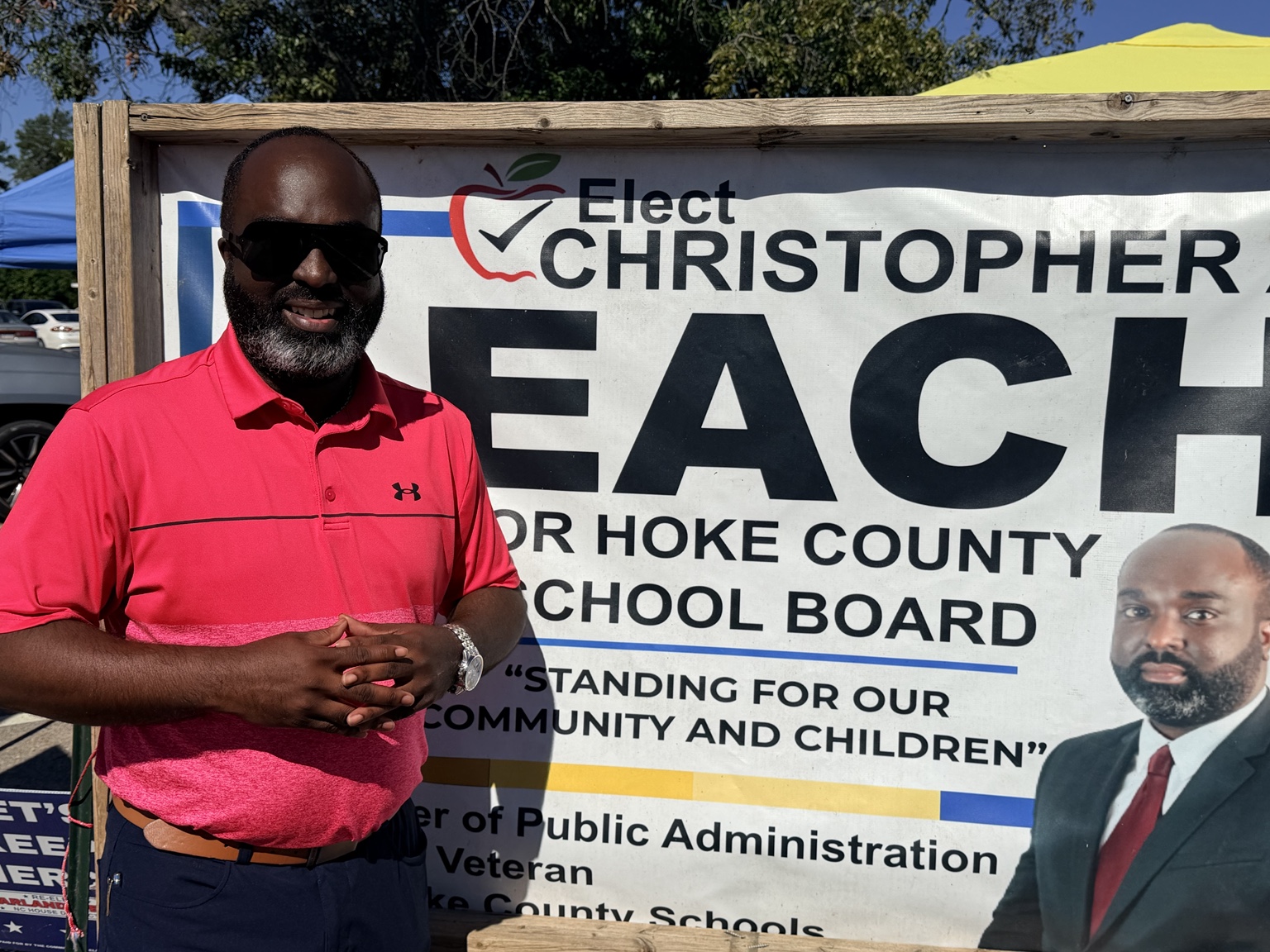
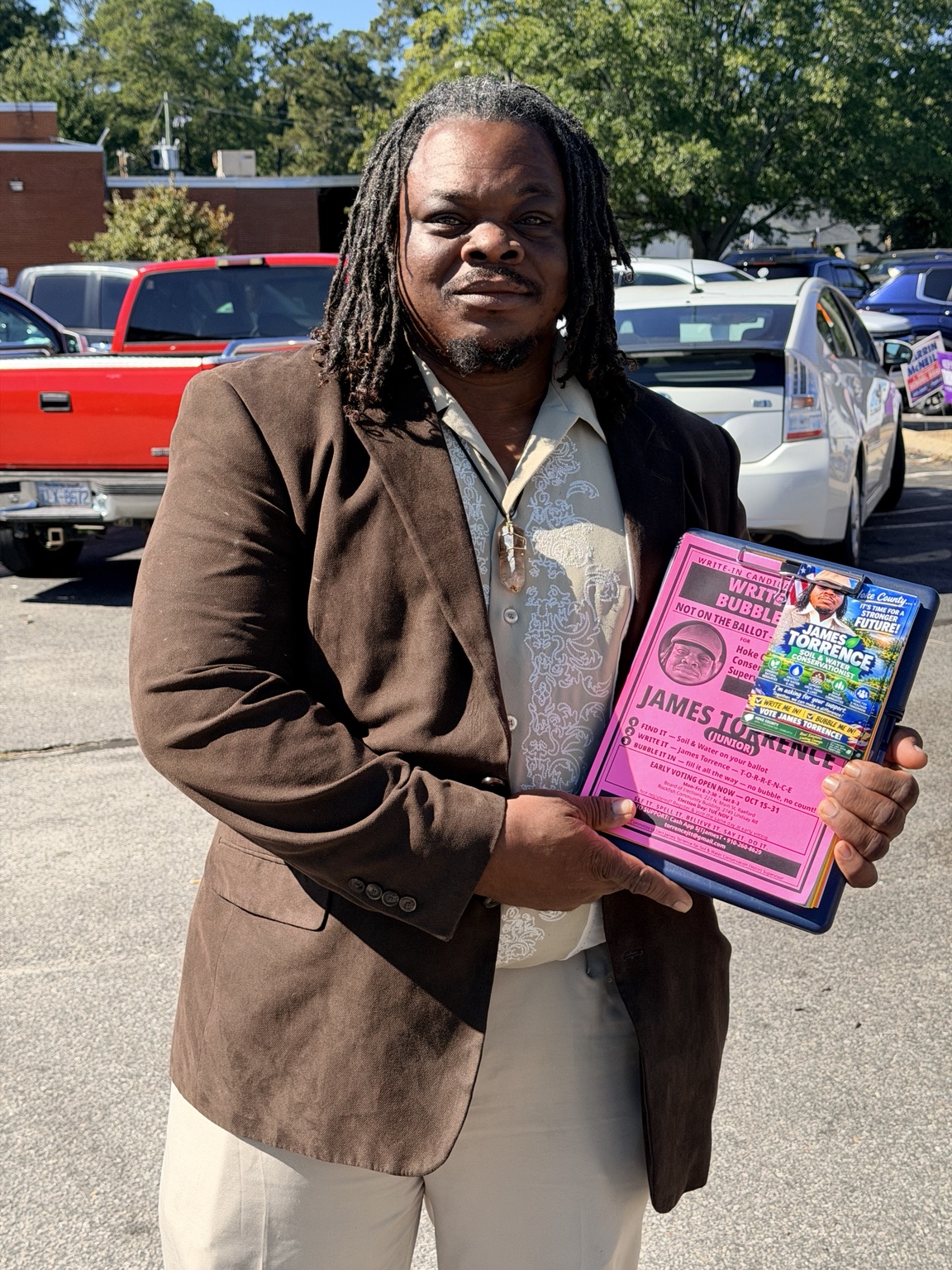
The following photographs were supplied to DINA from a Hoke County polling location during the 2026 early-voting period. DINA does not infer any person’s ballot choice from presence, clothing, campaign material or association. People not identified by the publication are described generically.

Conclusion: a rebuke, a referendum and a responsibility
Hoke’s early-vote swell is already historic by the most defensible local comparison. Democrats are participating at a striking rate. Republicans are not disappearing, but they are losing ground inside a rapidly expanding early electorate. Unaffiliated voters are arriving in numbers that make them impossible to treat as an afterthought.
The governing record also complicates simple anti-incumbent anger. On schools, recreation, transit, utilities, justice infrastructure, housing and economic development, Hoke voters have tangible evidence that public decisions can become public assets. The Justice Center ribbon cutting—held while early voting was underway—made that proposition concrete in real time. The ballot therefore carries two judgments at once: whether local stewardship has earned continuation, and whether the direction imposed from Washington reflects the economic and moral priorities of working people.
The answer is not hidden in a slogan. It is visible in the ledger, in the buildings, in the utility lines, in the household bills—and now, in 5,144 recorded acts of participation.
Sources and methodology
- Hoke County Board of Elections, Early Voting Voter Statistics, generated October 22, 2026 at 8:03 p.m.; report supplied to DINA and reproduced above.
- North Carolina State Board of Elections, Absentee and Provisional Data (historical county ballot-status files).
- NCSBE, How to Work With Our Data.
- DINA, “The Early Vote Reckoning,” October 18, 2026.
- DINA, “Hoke County’s Paper Trail,” October 3, 2026, with primary-source ledger.
- Hoke County Schools, Hoke County High School Project.
- Hoke County FY2024 Audit.
- DINA photographic record of the Hoke County Justice Center ribbon cutting and completed interior, October 22, 2026; images reproduced above. The reported $0.00 remaining construction balance is based on financial information provided to DINA and remains subject to confirmation in the final audited project closeout. Project background and pre-opening estimates: Greater Fayetteville Business Journal, May 18, 2023, and The News-Journal, February 7, 2024.
- N.C. Commerce, PTT expansion announcement and industrial-park waterline grant.
- Hoke County Board of Commissioners, April 6/14, 2026 minutes.
- The Assembly, North Carolina early-voting analysis, October 20, 2026; NC Newsline, unaffiliated turnout analysis.
- ABC News, national early-vote and enthusiasm analysis, October 22, 2026; Associated Press, multi-state early-vote analysis.
- Congressional Budget Office, estimated budgetary effects of Public Law 119-21 and distributional effects.
- Yale Budget Lab, State of U.S. Tariffs and Effect of Tariffs on Poverty.
- N.C. DHHS, SNAP Enrollment as of April 2025.
- Political-science context: “The Politics of Potholes: Service Quality and Retrospective Voting in Local Elections”; “When Are Local Incumbents Held Accountable for Government Performance?”.
Method note: DINA counted accepted records whose ballot-request type was ONE-STOP or EARLY VOTING and aligned elections by completed voting days. The first seven 2018 voting days ran October 17–25; the first seven 2022 voting days ran October 20–27; the first seven 2026 voting days ran October 15–22. Historical files can contain later administrative corrections. Percentages are rounded.